The right conveyor depends on the load’s underside, weight distribution, travel path and required control—not simply on whether the product is a box or pallet. By checking support, drive requirements, accumulation, transfers and operating conditions, you can decide when rollers are suitable and when a belt, chain conveyor, pallet conveyor or manual handling is safer and more reliable.
Key takeaways
- Choose rollers for rigid, flat-bottomed loads with known dimensions.
- Check the shortest load dimension before setting roller pitch.
- Use gravity only when slope and flow control suit the product.
- Specify powered rollers for accumulation, transfers, heavy loads or controlled spacing.
Which conveying method fits the load and the job?
Use this practical decision rule: choose rollers when your product family has known dimensions, a flat, rigid underside, and a need for accumulation or controlled transport. Confirm the shortest load dimension, weight, centre of gravity and contact points before selecting roller diameter, pitch and frame capacity.
| Option | Best fit | Main limitation |
|---|---|---|
| Gravity roller conveyor | Short, level or gently declining paths; freely rolling products; manual intervention | Variable speed, collisions and push effort |
| Powered roller conveyor | Metered movement, controlled speed, small inclines, reversing and multiple zones | Requires drives, controls and guarding |
| Belt conveyor | Soft, flexible or open bottoms, continuous support or precise orientation | Less suitable for product accumulation without added controls |
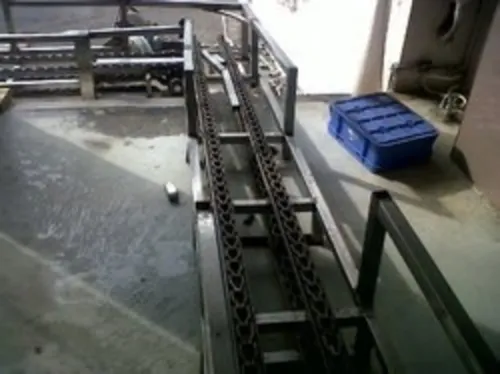
| Chain or pallet conveyor | Heavy pallets, rough bottoms, positive starting torque and defined runners | More noise, cost and moving-part guarding |
| Manual handling | Low volumes within your site’s lifting, pushing and travel limits | Labour exposure and inconsistent throughput |
For a belt conveyors comparison, ask whether the product can bridge roller gaps, skew or tip. Add a rigid tray or pallet only when that carrier solves the instability; extra rollers do not fix an irregular base. A gravity system has no universal slope, so test the heaviest, lightest, roughest and smallest loads.
Treat transfers, merges, stops and direction changes as part of selection. Include powered transfers, stops, holdbacks or braking where loads could coast, and specify chain-driven pallet conveying when broken boards, narrow runners or offset loads could overload individual rollers.
How do you verify that the product will ride safely on the rollers?
Start with the shortest load dimension in the direction of travel, not the average carton length. Set the roller pitch so at least three supporting rollers remain under the product at every moment; a short carton or narrow pallet may need tighter spacing than a longer load.
Check the product footprint, length, width, weight, base rigidity, centre of gravity and actual contact points. A flexible bag, damaged carton or product with protruding feet can sag between rollers, skew, stall or tip even when its dimensions appear suitable.
Use this verification checklist:
- Confirm the base is flat and rigid enough to cross each roller gap without sagging.
- For pallets, position rollers beneath the runners or deck members carrying the load. Do not approve the pallet from total weight alone; broken boards, narrow contact areas and offset loads change the support condition.
- Calculate usable capacity from the weakest combination of roller, shaft, bearing, frame, support spacing and load distribution.
- Apply a documented safety factor that includes concentrated loads, pallet-placement shock, hard stops, jams and loads entering gaps.
- Check stops and transfers separately. A product below the stated conveyor capacity can overload one roller or a stop when its centre of gravity is offset or its base touches only a small area.
Run the heaviest, smallest and least-rigid products through the actual layout. Watch for sagging, skewing, stalling, tipping and unexpected impact at gaps; a pass based only on static weight is not enough.
When does gravity work, and when do powered rollers earn their cost?
Gravity flow works when the actual product rolls freely on a level or gently declining path, and operators can manage its speed and spacing. The required gravity conveyor slope has no universal value: roller friction, bearing condition, product-bottom material, mass and load distribution all change it.
Test the real product range under production conditions:
- Run the heaviest, lightest, roughest and smallest products.
- Measure starting force and stopping distance.
- Observe cartons as they accumulate, release and contact one another.
- Repeat the test with empty, full, rough-bottomed and damaged cartons.
A slope that moves an empty carton can fail with a loaded carton whose bottom is rough or damaged. Gravity can also produce uncontrolled speed, collisions, back pressure and manual push effort; a level section can stop altogether.
Powered rollers earn their cost when you need fixed speed, metering, reversing, controlled inclines or multiple accumulation zones. Zero-pressure accumulation requires zone sensors and control logic; placing cartons against one another is not zero-pressure accumulation and can crush corrugate.
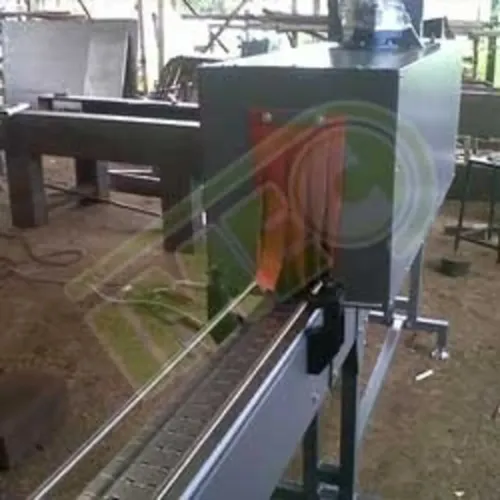
Choose belt-driven or line-shaft rollers for quieter carton transport. Choose chain-driven rollers when heavy loads need stronger positive drive and noise plus exposed moving parts are acceptable. Powered rollers also provide better control when stopping distance, release timing or product spacing matters more than the lower equipment cost of gravity flow.
What changes when pallets, heavy products and transfers enter the layout?
1. Treat pallet weight as the starting point, not the design input. Inspect pallet construction, runner spacing, broken boards, narrow contact areas and load offset before setting roller positions or drive torque. Support the pallet’s load-bearing runners or deck members; a damaged pallet can bridge rollers and overload one shaft.
Chain-driven pallet conveyors suit rough bottoms and heavy loads that need reliable starting torque.
2. Rate stops, transfers and end stations for impact loads, not steady transport. Pallet placement, hard stopping, a load entering a gap and jams can create forces far above static weight, so do not size these parts as ordinary frame members. Heavy product handling needs transient-load checks for the worst mass, speed and stopping distance.
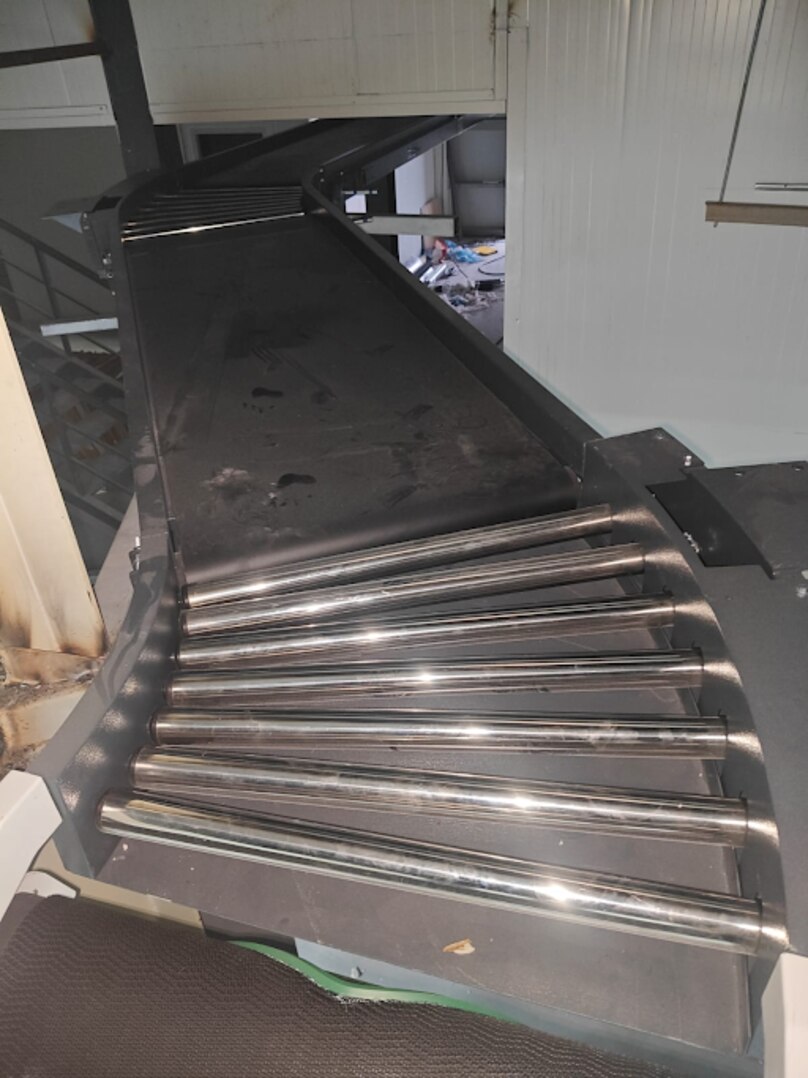
3. Test every direction change with the actual product. A load that rolls straight can stop at a perpendicular transfer when its base bridges a dead plate or the transfer rollers miss its support points. Use a dedicated powered transfer, pop-up mechanism, skewed rollers or a rigid carrier when the change requires positive movement.
4. On an incline or decline, rollers do not restrain a load after drive torque stops. Add braking, holdbacks, stops or speed control when coasting could cause collisions.
Complete OSHA conveyor guarding under 29 CFR 1910.212 and 29 CFR 1910.219 around roller nips, shafts, chains, drives and transfer points; emergency stops and lockout procedures do not replace physical guarding.
When should you reject rollers or demand a more specific design?
Reject rollers as the primary product surface when the load has a soft, highly irregular, or open bottom unless a rigid tray, pallet, carrier, or transfer plate supports it. Flexible bags, very small items, unstable loads, damaged pallets, and products needing continuous belt support are poor candidates.
Choose another technology when precise orientation, positive containment, or clean presentation outweighs accumulation.
Use this checklist before approving rollers:
- Confirm every load has a stable underside and enough support to avoid sagging, skewing, tipping, or catching between roller gaps.
- Treat wet service and abrasive dust as design risks: water increases drag, while debris can stop small rollers from turning and shorten bearing life.
- For a washdown conveyor, specify sealed bearings, corrosion-resistant materials, drainage, cleaning access, and the enclosure rating for drives and controls. Stainless or galvanized rollers alone do not make equipment washdown-ready.
- Demand a defined conveyor design specification covering the full product range, weights, underside photographs, pallet drawings, speeds, slopes, transfers, and cleaning conditions.
For a Coimbatore project, Integrated Conveyors And Pacline Automation Technologies can use that information to test the layout against real loads, transfer points, and cleaning conditions instead of a nominal capacity alone.
Related products
 | Conveyor A Gravity Roller Conveyor is a material handling system used for smooth and efficient movement of boxes, cartons, totes, and packaged products... View product → |
 | Roller Conveyor The Roller Conveyor has been optimised to transport a great variety of tote and carton types. View product → |
Frequently asked questions
Which conveying method fits boxes, pallets and heavy products?
Choose rollers when loads have known dimensions, a flat rigid underside, and a need for accumulation or controlled transport. Compare belts, chains or other methods when the load is flexible, unstable, irregularly shaped or lacks reliable roller contact.
How do you verify that a product will ride safely on rollers?
Measure the shortest load dimension, total weight, centre of gravity and underside contact points. Select roller diameter, pitch, frame capacity and guide spacing so the load remains supported and stable throughout its travel.
When does gravity work, and when do powered rollers earn their cost?
Gravity rollers suit loads that can move down a controlled slope without damaging products or creating unsafe gaps. Powered rollers earn their cost when you need accumulation, precise spacing, level transport, controlled speed or movement across flat sections.
What changes when pallets, heavy products and transfers enter the layout?
Increase structural capacity and check pallet runners, load distribution, transfer clearances and stopping forces. Add powered zones, chain transfers, lift transfers, guides or stops when loads must change direction, merge, divert or accumulate.
When should you reject rollers or demand a more specific design?
Reject a standard roller layout when the load has a soft or uneven base, unstable centre of gravity, small contact area, loose contents or dimensions that vary widely. Request a detailed design when transfers, inclines, accumulation, high impact or unusual loads affect safe operation.
Related products
 | Conveyor Move Heavy Loads. Faster. Smarter. No Manual Push. Stop wasting manpower on material movement. View product → |
 | Conveyor Our Power Roller Conveyor is a high-performance automated conveyor system designed to move heavy loads with ease and precision. View product → |
 | ROLLER CONVEYOR The Motorized Roller Conveyor is designed for smooth, efficient, and automated material handling across production, packing, and assembly lines. View product → |
 | CONVEYOR Powered Roller With Free Roller Conveyor The Powered Roller Conveyor with Free Roller is an efficient material handling system designed to transport products smoothly across production and... View product → |