A truck loader improves dock performance only when it removes the right source of delay: operator travel, awkward reaches, poor carton presentation, or slow trailer changeovers. You will be able to map a workable loading process, compare conveyor designs, specify the right dimensions, measure the result, and identify the safety or operating conditions that make another method better.
Key takeaways
- Secure the trailer and seat the dock plate before positioning the conveyor.
- Choose telescopic, flexible, or fixed conveyors to suit the dock layout.
- Measure loading time, labor, damage, and the next bottleneck after installation.
Build the Loading Workflow Around the Trailer
Position the truck loader only after the trailer is secured at the dock and the dock plate or bridge is seated. Set the conveyor’s discharge height to meet the trailer floor without a steep drop, then check the threshold transition for gaps, snag points, and sudden changes in support.
1. Stage cartons near the induction point in the planned delivery sequence. Carton induction must match the conveyor’s useful capacity in cases per minute at the actual carton size, weight, spacing, and orientation—not its empty-belt speed.
2. Feed cartons with barcodes facing the scanner and keep operators within a short, neutral reach. Adjust working height so nobody lifts from floor level, twists into the trailer, reaches beyond the belt, or repeatedly places cartons above shoulder height.
3. Build the load from the trailer’s far end toward the doors, following a stable stacking pattern. Use metering, zero-pressure accumulation, or stop-start control when mixed cartons could compress against the load face.
4. Slow or stop feeding before the final cartons arrive. Let operators remove the last carton safely, clear the belt and trailer threshold, confirm no person or package remains inside, and return the conveyor to its parked position before releasing the trailer.
Match the Conveyor Type to the Dock Layout
A fixed dock serving consistent trailer heights suits a fixed-height conveyor. A changing trailer fleet needs a telescopic conveyor, while an uneven yard calls for a mobile truck loader or flexible conveyor that can be repositioned and adjusted.
| Option | What it means | When it applies |
|---|---|---|
| Fixed-height conveyor | Permanent conveyor at one dock height and position | Use with consistent dock leveler height, trailer floor height, and load direction |
| Telescopic conveyor | Extends into the trailer and adjusts vertically | Use when trailer lengths, floor heights, and load plans change |
| Mobile truck loader | Conveyor on a movable frame or wheels | Use across multiple doors, outdoor loading points, or uneven yard positions |
| Flexible conveyor | Expandable, bendable sections that follow the access path | Use where door locations, trailer openings, or staging positions change frequently |
Check the transition at the dock plate and trailer threshold before choosing any design. A poor height match creates a step, catches cartons, and leaves operators carrying goods across the gap.
A telescopic conveyor that stops short of the load face still leaves manual travel inside the trailer; a mobile unit that blocks forklift aisles creates a new delay.
Measure required aisle clearance, egress routes, support stability, and discharge reach at the worst trailer position, not the easiest one. Include stop controls where people work inside the trailer.
Specify Dimensions for Real Dock and Trailer Conditions
A 28-foot trailer needs more than a conveyor that reaches its doors. Specify conveyor length and telescopic travel so the discharge point stays near the current stacking position without forcing workers to carry cartons or reach beyond the belt. Include vertical adjustment for dock height, trailer-floor variation, dock-plate angle, and the trailer threshold.
| Specification | What to define | Failure to prevent |
|---|---|---|
| Conveyor length | Full reach into the shortest and longest trailer | Manual carrying, excessive reaching, and incomplete loading |
| Belt width | Carton footprint, side clearance, and stable presentation width | Cartons overhanging, falling, or striking guides |
| Rated load | Maximum live load on the belt, including accumulated cartons | Belt slip, structural deflection, or drive overload |
| Belt speed | Metres per minute matched to cartons per minute, spacing, scanning, and orientation | A fast belt that still creates a feed bottleneck |
| Discharge height | Safe handoff height at the trailer floor and stack | Lifting from floor level or placing cartons above shoulder height |
| Adjustment range | Dock, trailer, and floor-height differences | A step, gap, or sharp transition that jams cartons |
Ask for the useful capacity in cases per minute at your actual carton weight, size, spacing, and loading pattern, not belt speed alone. Include guarded transitions, accessible emergency stops along the operating length, and clearance for forklifts and egress.
Integrated Conveyors And Pacline Automation Technologies can use these site measurements to distinguish a workable reach from a nominal conveyor dimension.
Related products
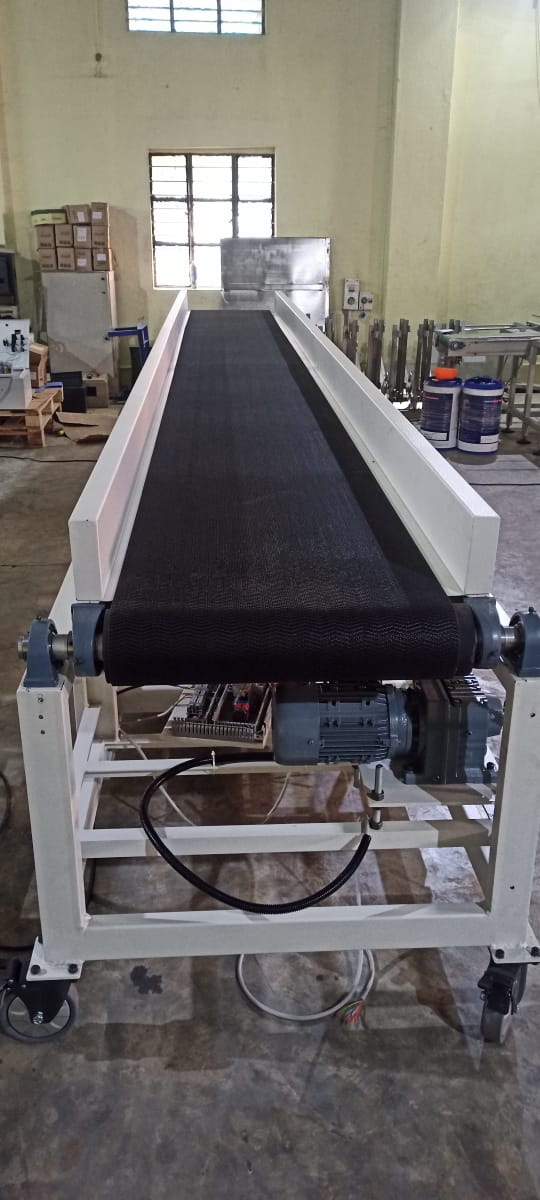 | Belt Conveyor Truck Loading & Unloading Conveyor System We are one of the most reputed manufacturers of Truck Loading Conveyors. View product → |
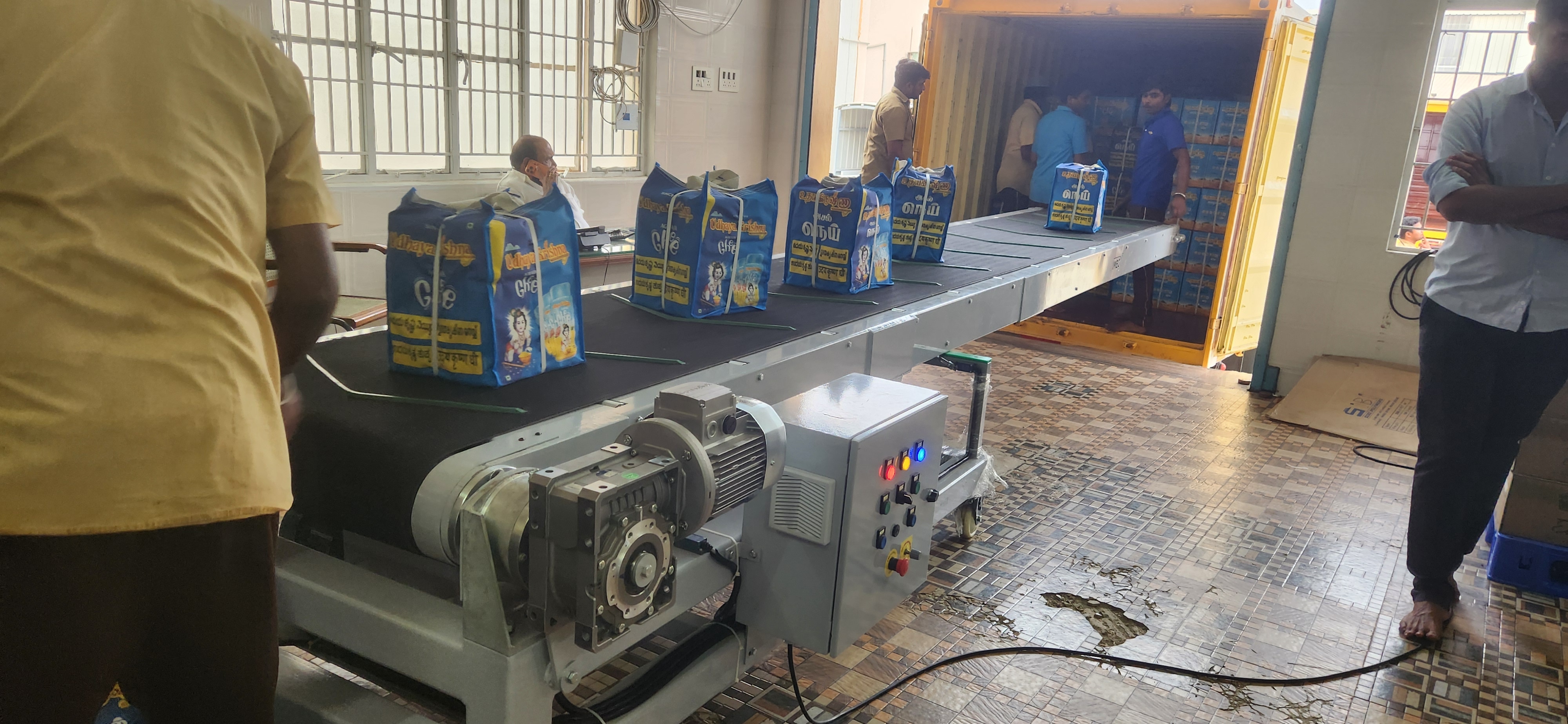 | CONVEYOR The Truck Loading Conveyor is a highly efficient material handling system designed for fast and easy loading or unloading of goods from trucks,... View product → |
Measure the Gain Without Hiding the New Bottleneck
Compare matched loads before and after installation: the same carton mix, trailer type, shift pattern, and dock. Record arrival, door assignment, loading start, final carton, paperwork, and departure times; otherwise a shorter loading task can hide a longer wait for staging or trailer release.
Capture these measures for every load:
- Truck turnaround time, from yard arrival to departure
- Cartons per hour, measured at the trailer rather than from nominal belt speed
- Queue time before loading, including waits for cartons, a door, or a trailer
- Labor hours per load, including feeding, stacking, scanning, clearing jams, and cleanup
Review the figures by process step. If trailer loading time falls but queue time rises at carton induction, staging, or door assignment, the conveyor moved the constraint upstream; it did not increase dock throughput. Track the longest queue and its duration before and after the change.
Include planned maintenance, cleaning, changeover, fault recovery, battery charging, and guarding inspections in available dock hours. Check load quality too: count crushed cartons, misroutes, and manual rehandles. A genuine gain means faster truck turnaround time with stable quality, lower labor hours per load, and no loss of dock availability.
Balance Continuous Flow With Load Quality
Continuous conveying improves loading when cartons arrive at a steady rate, share a compatible load pattern, and can move directly from induction to the trailer. It cuts operator travel and manual carrying, but it does not create dock capacity. If an upstream operation is slow, a faster belt simply shifts the queue.
Use metering instead of an uninterrupted stream when the load needs sequencing or scanning. Zero-pressure accumulation holds cartons without pushing them together, preserving gaps and allowing controlled release. That matters when you need a FIFO sequence or SKU separation; a continuously running conveyor can erase those gaps and make the planned load harder to build.
Do not force continuous flow on unstable goods or fragile cartons unless the transfers and restraints work at operating speed. Small packages can bridge roller gaps, while shifting cartons can collide at the discharge or trailer threshold. The result is product damage, jams, and manual intervention.
Specify capacity in cases per minute using the actual carton size, weight, spacing, and orientation—not belt speed alone—and test the dock-to-trailer transition with a changing load.
Control Trailer Movement, Access, and Stored Energy
Before anyone enters the trailer or works near the conveyor, secure the trailer against movement. Apply the dock’s vehicle restraint, set wheel chocks when required by the site procedure, confirm the trailer floor can support the equipment, and keep dock-edge protection in place at open edges.
Use a pre-start procedure that confirms:
- The trailer-presence sensor, conveyor-position sensor, jam detection, overload protection, and access-zone interlocks show a safe state.
- Guards cover pinch points at pulleys, sprockets, chains, rollers, belt returns, and transfer points.
- Emergency-stop cords or local stop stations reach every work position, including inside the trailer. A person must be able to stop the conveyor without walking back to the main control panel.
- Forklift routes, pedestrian aisles, trailer doors, and emergency exits remain clear. Do not place controls, supports, or cables where they create a collision or trip hazard.
- Cleaning, jam removal, and servicing require shutdown, isolation, lockout, and tagout of electrical, pneumatic, hydraulic, gravity, and stored mechanical energy. Test the controls before contact, and block elevated or suspended sections against descent.
- Restart requires deliberate acknowledgement after the area is checked and every person is clear; never permit an automatic restart after a fault or power return.
A supervisor should verify these controls at each trailer changeover, not only during installation. A faster loader cannot justify bypassing an interlock or removing a guard.
Frequently asked questions
What must you check before positioning a truck loader conveyor?
Secure the trailer, seat the dock plate or bridge, set the discharge height to the trailer floor, and inspect the threshold for gaps and snag points.
How do you choose a conveyor type for a warehouse dock?
Match the conveyor to the dock’s reach, turning space, trailer variation, and need for repositioning. Telescopic conveyors suit deep trailer access, while flexible conveyors suit changing positions.
Which dimensions matter when specifying a truck loader conveyor?
Check conveyor width, operating height, extension or retraction range, load capacity, trailer floor height, threshold clearance, and the largest package dimensions.
How should you measure whether a truck loader conveyor improved efficiency?
Compare loading and unloading time, labor hours, trailer dwell time, throughput, damage rates, and interruptions before and after installation. Track the next bottleneck separately.
How can you protect load quality during conveyor transfer?
Control speed, reduce drop height, support packages through transitions, and use guides or stops where loads could shift, fall, or collide.
Related products
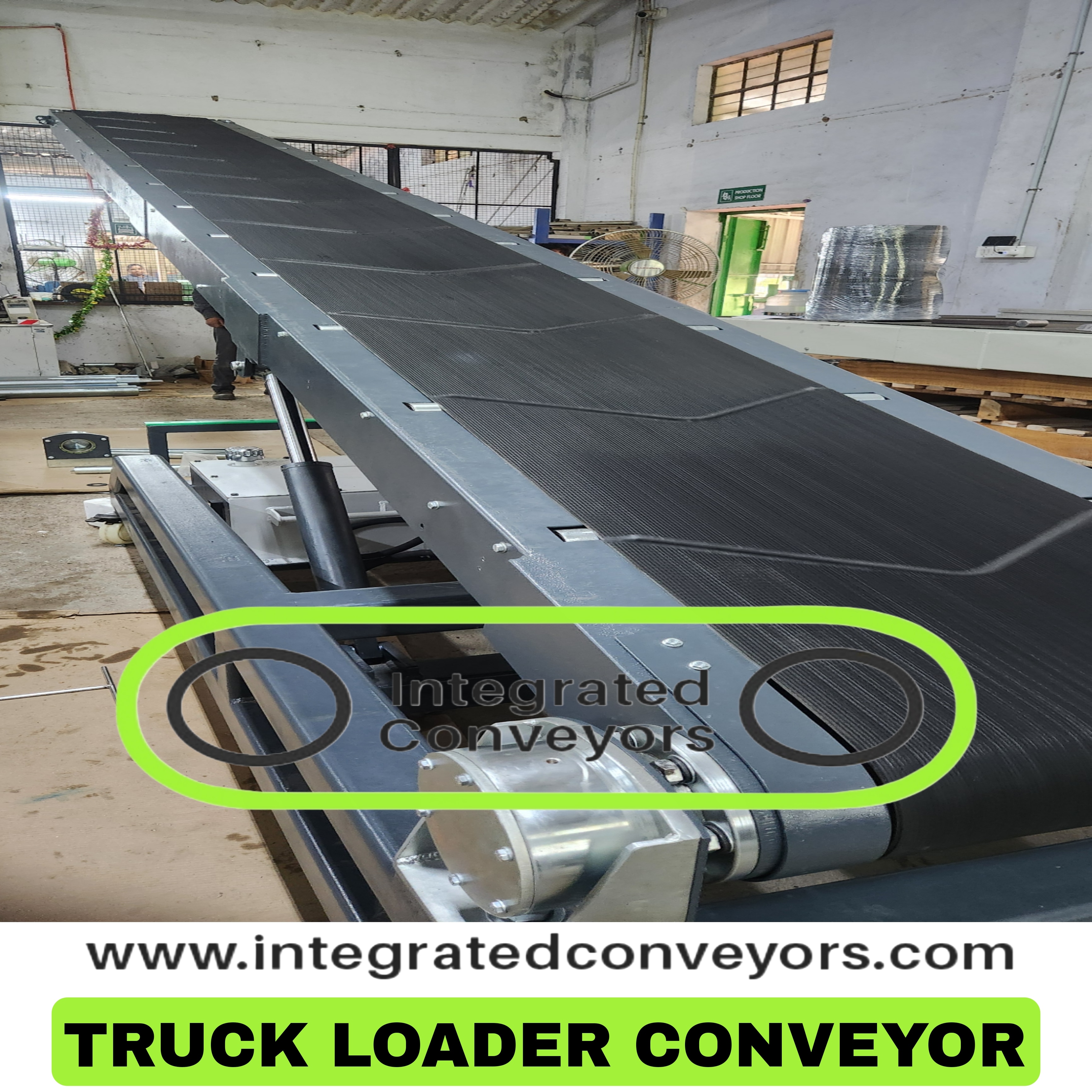 | Conveyor TRUCK LOADING AND UNLOADING CONVEYOR Truck Loader Conveyors are efficient, flexible, and essential equipment designed to streamline the loading and unloading process in warehouses,... View product → |
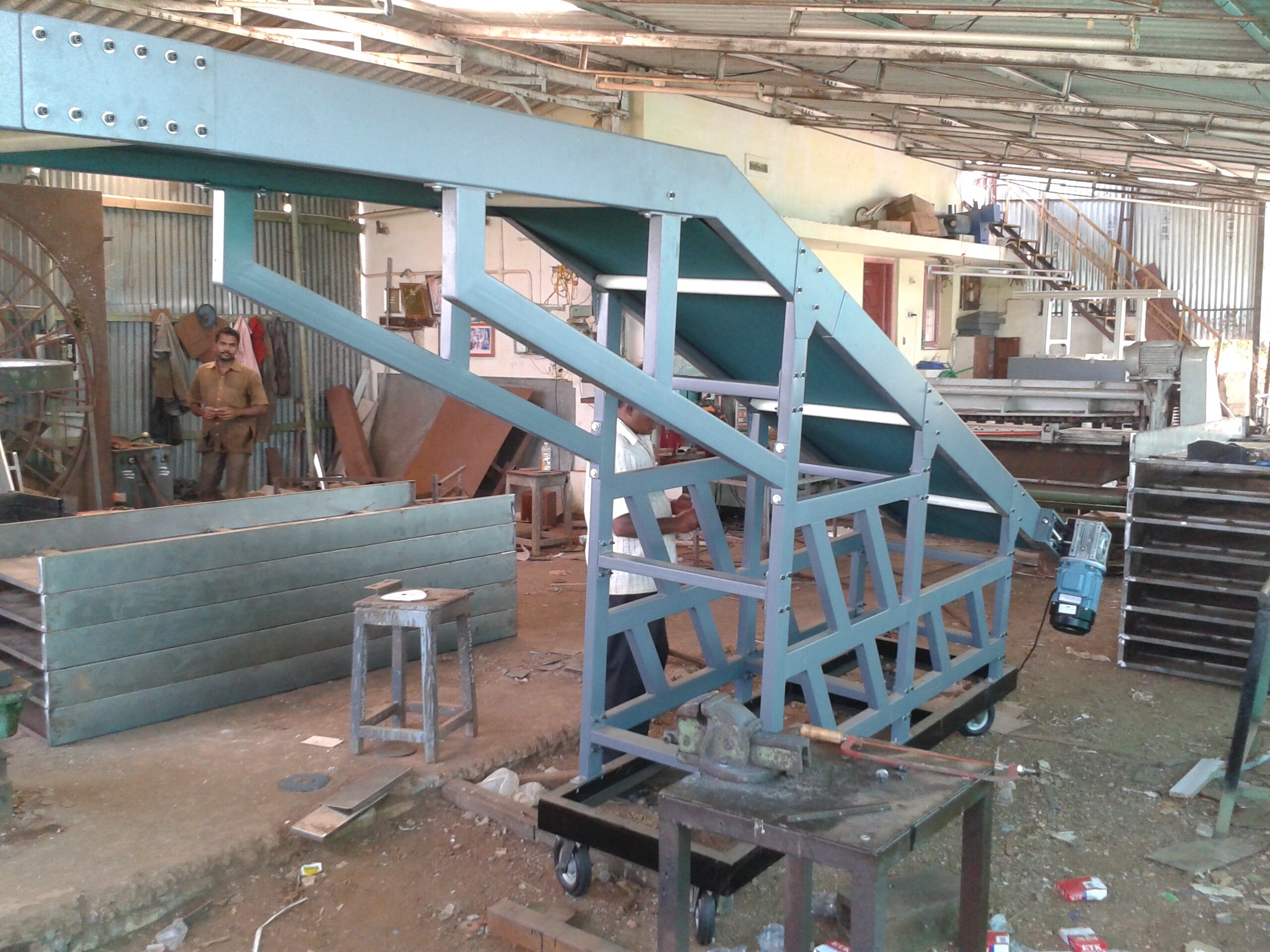 | Fixed Height Loading Conveyor System We are one of the most reputed manufacturers of Truck Loading Conveyors. View product → |
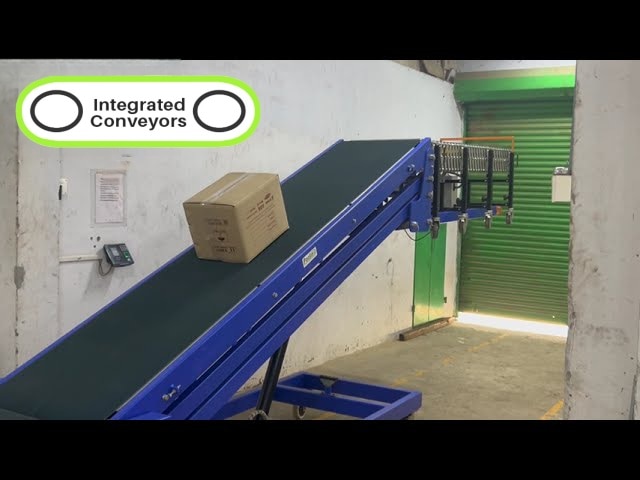 | Conveyor The Mobile Truck Loading Conveyor is a versatile and time-saving solution designed to streamline the loading and unloading of bags, cartons, or bulk... View product → |
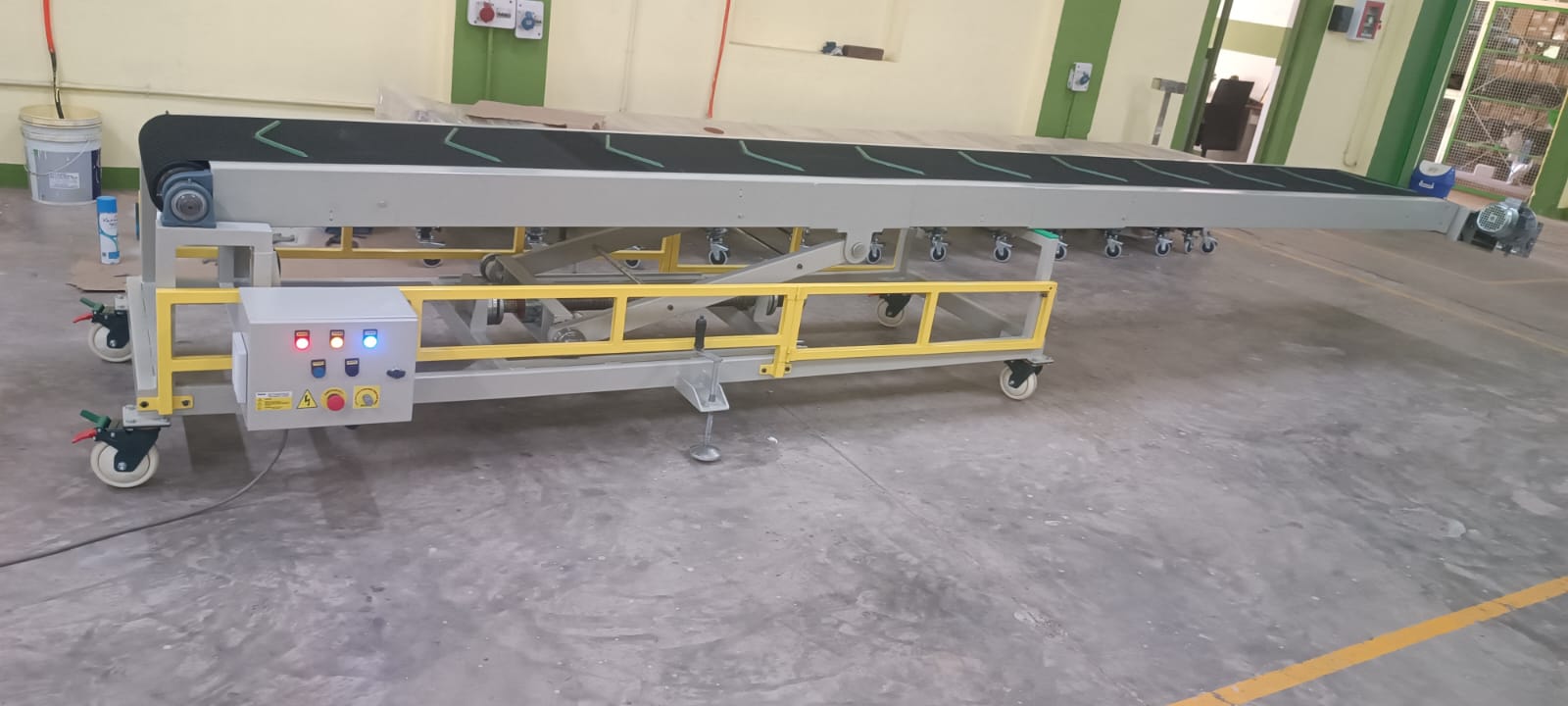 | CONVEYOR MANNUAL TRUCK LOADING CONVEYOR A Manual Truck Loading Conveyor is an efficient material handling solution designed to simplify the loading and unloading of cartons, bags, boxes,... View product → |