A passive ball surface helps an operator turn, shift, or present a rigid load without lifting it, but it does not drive the load or hold its orientation by itself. By checking the load underside, support pattern, movement requirements, and surrounding equipment, you can decide whether a ball transfer table is the right workstation tool or whether a roller, belt, turntable, lift, or powered transfer will control the job better.
Key takeaways
- Use ball tables when loads need manual movement in multiple directions.
- Match ball spacing and capacity to the load’s underside and weight.
- Choose powered transfers when movement, orientation, or stopping must be automatic.
- Specify handoffs, cleanliness, load footprint, and stopping before selecting equipment.
How a ball transfer table moves a load in practice
Place the product on the balls, then apply a horizontal push or pull toward its new position. A passive ball-transfer table supplies low friction, not motive power: the operator, an upstream conveyor, gravity, or a separate powered device must start and continue the movement.
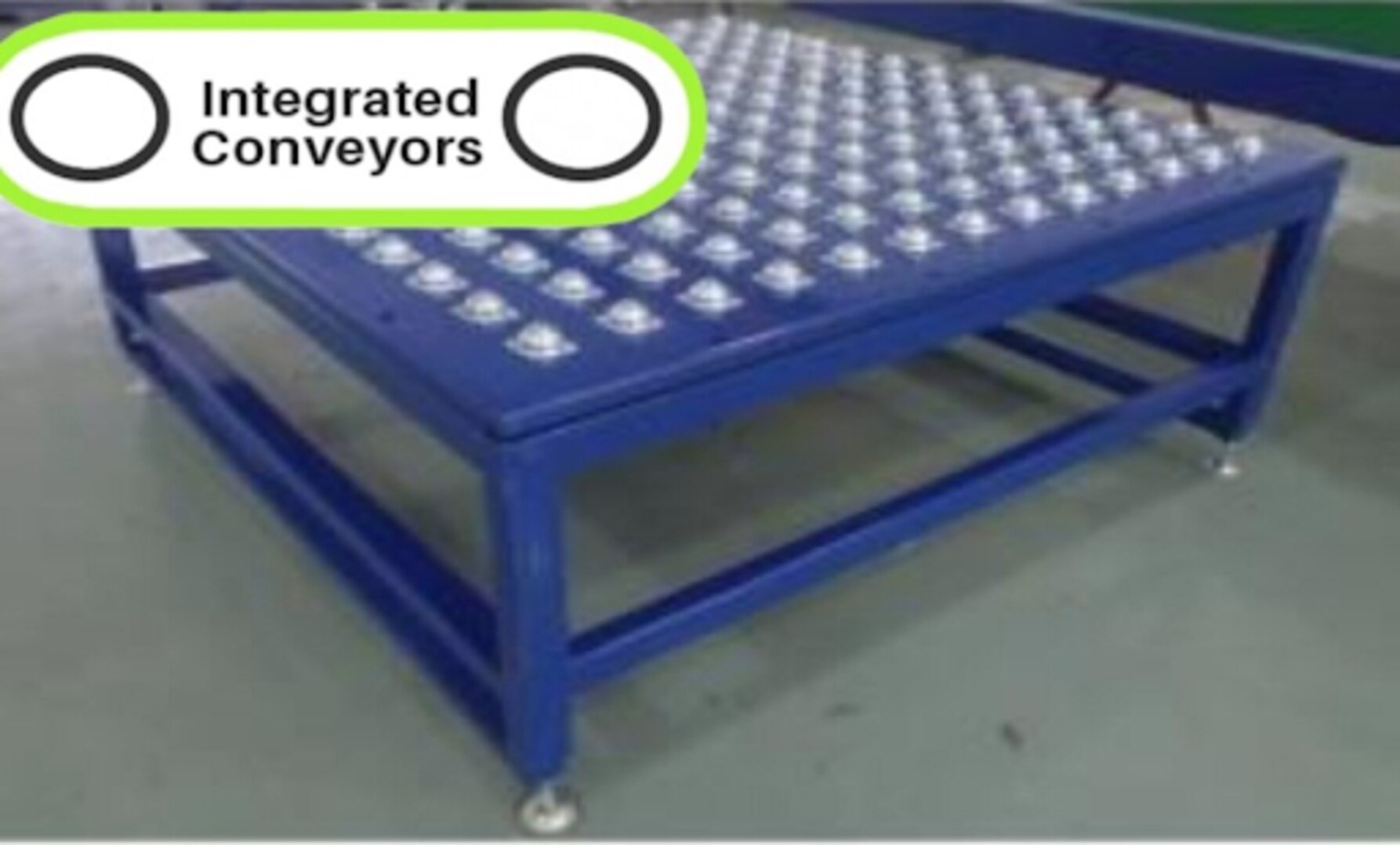
It allows lateral movement and rotation, so one worker can turn a carton, fixture, pallet, or tote without lifting it.
Use the transfer in this sequence:
- Set the load fully onto the table, keeping its centre of gravity over the supported area rather than beyond an edge.
- Push or pull it across the balls toward the receiving position. For manual repositioning, use steady force; a sudden shove can send the load rolling after your hands leave it.
- Let a guide, stop, adjacent table, or conveyor define the destination and prevent drift or collision with another product.
The load needs a rigid, reasonably flat underside that contacts several ball units at once. Soft bags, irregular bases, narrow feet, damaged pallets, and loose parts can snag, tilt, or concentrate force on too few balls.
Do not add every unit’s rating and treat that total as safe capacity; account for uneven support, off-centre loading, impact, and product stiffness. If uncontrolled rolling or product-to-product contact is unacceptable, add a stop, brake, divider, or powered zone.
Match the table to the load underside, weight, and footprint
A product will move reliably only if its underside stays supported by several balls throughout the transfer. Start with the smallest bottom dimension, not the table width: set ball spacing so a carton, pallet board, or skid cannot bridge a gap, sag, or tip.
Check these load characteristics before selecting the table:
- Underside: Choose a rigid, reasonably flat, continuous base. Damaged carton bottoms, flexible totes, rough pallets, narrow feet, and widely separated supports can drag or hang up.
- Weight: Compare the load weight with the load capacity, but do not add every ball transfer unit capacity and assume that is safe. Rate the table against the minimum number of units carrying the load at one time, including off-centre loading and impact.
- Centre of gravity: Keep it within the supported footprint. An elevated or offset centre of gravity can make a load tip when you push it sideways or rotate it.
- Contact points: Sharp feet, exposed fasteners, and fragile bases concentrate force at each ball. Use a load-spreading plate or pallet when those points could mark the product or damage the units.
- Footprint: Confirm that the load contacts multiple balls at every position, including during rotation and near table edges.
A passive table also needs a rigid load that can accept point contact. Soft bags, loose parts, or irregular bases need a support pallet, wear plate, roller surface, or another transfer method. A high total rating cannot compensate for poor contact or uneven support.
Choose between a ball table and other transfer equipment
A ball transfer table is the better choice when a rigid load needs short-distance repositioning or rotation by hand, without a fixed travel path. It suits workstation staging and right-angle handoffs, but not long-distance transport or controlled accumulation.
| Equipment | Best when | Choose something else when |
|---|---|---|
| Ball transfer table | You need movement in any horizontal direction, including rotation, within a compact manual station. | The load must travel continuously, accelerate, stop automatically, or follow a defined route. |
| Skate-wheel conveyor | You need an economical straight path for cartons or totes pushed by hand or gravity. | Operators must move loads sideways or rotate them without lifting. |
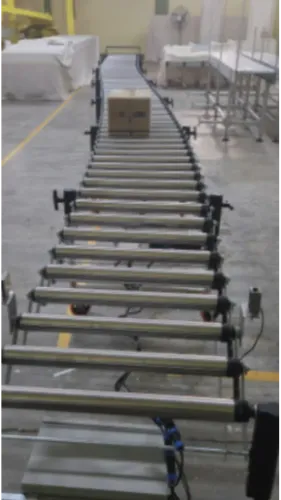
| Roller conveyor | You need stable longitudinal travel, powered movement, accumulation, or integration with a continuous conveyor. | Frequent free-direction repositioning matters more than path control. |
| Turntable | You need to rotate a load around a fixed centre and return it to a known discharge line. | Operators need to shift the load in several directions across a work area. |
| Lift table | You need to change elevation for ergonomic loading or vertical transfer. | The problem is horizontal reorientation rather than height. |
| Transfer cart | You need to carry heavy loads across a gap or between separated lines. | A fixed, compact workstation surface can handle the handoff. |
At any conveyor transition, check the gap and ball-top coverage rather than matching nominal elevations alone. Small products, feet, damaged carton bottoms, and rough pallets can catch or bridge; a support plate, pallet, roller conveyor, or guided transfer may provide the safer surface.
Control orientation, handoffs, cleanliness, and stopping
Side guides keep a tall, uneven, or high-centre-of-gravity load from yawing as an operator pushes it sideways. Set the guides with enough clearance for the widest load, but not so far apart that a carton can turn across the path; add a locating fixture when orientation must repeat.
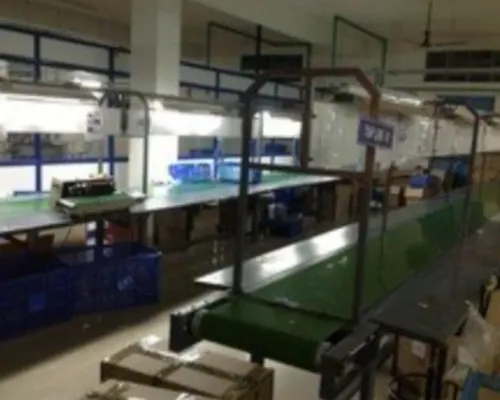
At a handoff, match working height rather than nominal frame elevation. Bridge the gap so the product cannot drop between the ball table and wire-mesh conveyor integration point, and provide enough ball support for the load to cross without tipping.
Small products and products with narrow feet can catch on a ball housing, so use a transition plate or redesign the spacing.
Use these controls when the product must stop or remain separated:
- Fit an end stop at the presentation position, with a cushioned face or sensor if impact could damage the load.
- Add a brake, latch, or divider when gravity or a push could carry the product beyond its station.
- Use powered indexing or controlled zones when the process needs zero-pressure accumulation; a passive table is not inherently zero-pressure accumulation equipment.
Keep the surface clean. Chips, film, straps, and product residue can jam ball units, raise a load, or create uneven support, so inspect the housings and clear debris at each shift change.
Do not use a long passive table as a substitute for a defined transport path. It gives freedom to move, but not controlled pitch, registration, or separation.
Turn the operating need into a ball-table specification
Ask an industrial conveyor supplier for a written specification based on your actual loads, environment, and handoff conditions—not a catalogue capacity alone. Confirm:
1. The exact ball-transfer-unit model, housing construction, raceway design, mounting orientation, and published rating for your load direction. Check capacity against the minimum number of units supporting the product at one time; do not add every unit’s rating.
2. The ball material and surface finish. Stainless steel suits wet or corrosive areas, while hardened steel may suit abrasive industrial loads. Ask how the rating changes with off-centre loading, impact, and a flexible or weak pallet underside.
3. Whether sealed ball units or protected units are needed. Chips, fibres, dust, packaging scraps, and washdown residue can increase resistance and cause sticking. Confirm the cleaning method, drainage, corrosion resistance, and access for replacing contaminated units.
4. The table’s unit spacing, working height, edge guards, stops, and load-spreading plate. The product must contact several balls without sharp feet, exposed fasteners, or a fragile base taking concentrated point loads.
5. The physical handoff to the existing conveyor. Confirm the gap, height tolerance, ball-top support, guides, and snag protection, especially where a wire-mesh conveyor meets the table. Integrated Conveyors And Pacline Automation Technologies can use these details to assess the transition rather than matching nominal elevations only.
Related products
 | BALL TABLE The Ball Table Conveyor is a versatile material handling solution designed for easy multi-directional movement of products during assembly,... View product → |
 | Ball Transfer Table We, Integrated conveyors PACLINE are one of the leades in to the planning, production and assembly of sorting systems and components for the waste... View product → |
Frequently asked questions
How does a ball transfer table move a load?
The balls reduce friction while an operator, conveyor, gravity, or separate powered device supplies the push or pull. A passive table does not move loads by itself.
What should you check before placing a load on a ball table?
Check the load’s weight, footprint, underside condition, rigidity, and contact points. Ball spacing must support the load without allowing it to tip or drop between balls.
When is another transfer system better than a ball transfer table?
Choose powered conveyors or transfers when you need automatic movement, controlled orientation, precise stopping, accumulation, or reliable handling without operator force.
What belongs in a ball-transfer-table specification?
State load dimensions and weight, underside material, ball spacing, table height, direction changes, handoff equipment, cleanliness requirements, orientation controls, and stopping method.