


Thank you for writing to us. One of our executive will reach back to you through your submitted medium. In case there’s an urgency, feel free to connect over WhatsApp for faster response.
Prefer calling? Dial +9108048053966 (International callers) or 08048053966 (Indian callers).
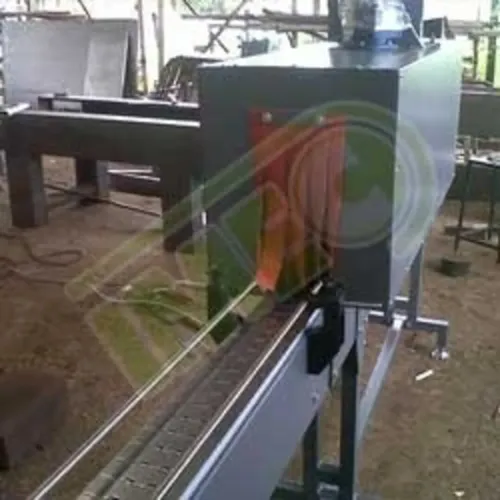
This isn’t just a conveyor with a weighing scale slapped on. A checkweigher system is a precision setup designed to measure product weight in motion and reject anything out of spec. If you build it casually, it will fail. Period.
What it actually is
A flat belt conveyor integrated with a dynamic checkweigher that:
Weighs products while moving
Compares with preset limits
Automatically rejects underweight / overweight items
Used in industries where compliance = money (food, pharma, FMCG).
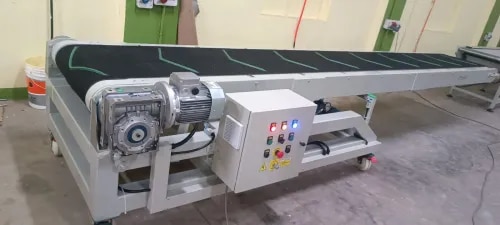
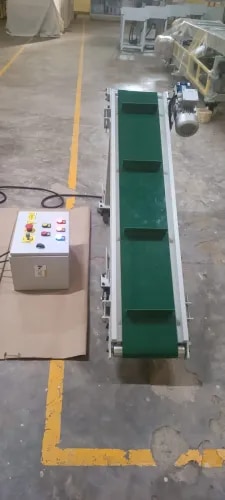
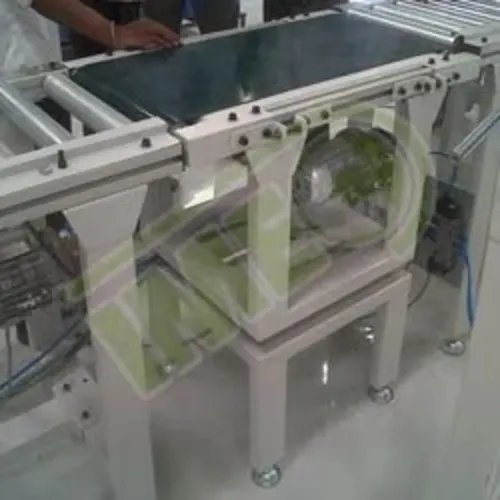
A flat belt conveyor is the most basic and most used conveyor system. It moves materials on a continuous flat belt driven by rollers or pulleys.
What it actually consists of (no fluff)
Belt – PVC / PU / Rubber (depends on load and industry)
Drive pulley – connected to motor
Idler pulley – supports belt return
Motor & gearbox – controls speed and torque
Frame – MS (cheap) or Aluminium profile (clean, modular)
Support legs – fixed or adjustable height
Where it’s used (real applications)
Packaging lines
Assembly lines
Inspection conveyors
Inkjet printing conveyors
Food processing (if SS + PU belt)
E-commerce sorting
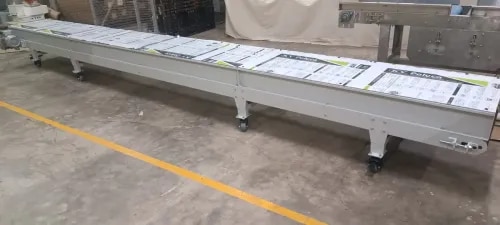
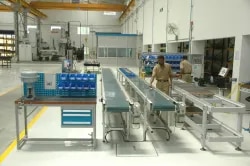
The Assembly Line Conveyor is a continuous material handling system designed to streamline production and assembly processes. It enables products to move systematically through multiple workstations, where specific tasks are performed at each stage, ensuring organized workflow and improved productivity.
Built with a robust structure (mild steel or aluminium profile), the system supports efficient assembly operations by reducing manual handling, minimizing delays, and maintaining consistent production flow.
⚙️ Key Features
Continuous Workflow System – Smooth product movement across stations
Custom Workstations – Designed for specific assembly tasks
Robust Construction – MS or aluminium structure for durability
Adjustable Speed Control – Matches production requirements
Ergonomic Design – Reduces operator fatigue
Expandable Layout – Scalable for future production increase
🔄 Working Principle
Products are placed on the conveyor and move through predefined stations. At each station, operators perform specific assembly or inspection tasks before the product moves to the next stage.
📊 Applications
Manufacturing industries
Electronics assembly
Automotive components
Packaging and inspection lines