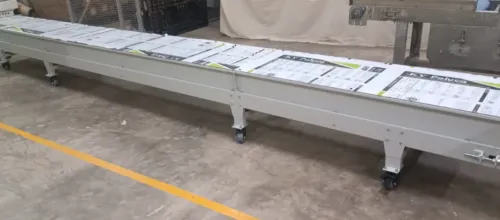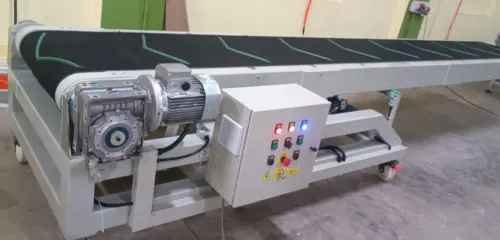
When production depends on repeated operations performed in sequence, Assembly Line Conveyors can help establish a predictable flow between workstations. The challenge is selecting a system that matches the product, operator requirements, production rate, and available space.
Integrated Conveyors And Pacline Automation Technologies provides conveyor and automation solutions for industrial processes, including applications where workstation integration and controlled product movement are required. Coimbatore manufacturers planning an assembly-line investment should begin with process data rather than equipment dimensions alone.
Define the Assembly Sequence
List every stage through which the product passes. Identify manual operations, machine operations, inspection points, testing, rework areas, and final transfer.
This determines how many stations are required and how materials should move between them.
Calculate the Required Production Rate
A conveyor should support the target output without forcing operators to work at an impractical pace.
Consider:
- Units required per shift
- Number of operators
- Time required at each station
- Planned breaks
- Product changeovers
- Inspection requirements
- Expected peak production
The slowest process often determines practical line capacity.
Evaluate Workstation Ergonomics
Conveyor height and workstation arrangement influence operator comfort. Frequently used tools, components, bins, and fixtures should be positioned logically around the work area.
An assembly conveyor is most effective when material movement and human tasks are designed together.
Check Product Handling Requirements
Small components may require trays, pallets, fixtures, or dedicated carriers. Larger products may need wider belts or stronger structures.
Product stability during transfer should also be evaluated, particularly around curves, inclines, stops, or inspection points.
Plan for Future Changes
Production lines rarely remain unchanged forever. New models, increased output, additional inspection stages, or process automation may be introduced.
Where practical, the conveyor arrangement should leave room for modification.
Selecting a Provider in Coimbatore
Before finalizing a supplier, manufacturers should discuss product specifications, layout drawings, required throughput, operating conditions, control requirements, and integration with existing machines.
Coimbatore has a strong engineering and manufacturing ecosystem serving industries across Tamil Nadu and beyond. For these businesses, assembly line conveyors can become an important part of standardized production.
The right system should support the complete assembly process, provide practical operator access, and accommodate realistic production requirements. Careful planning before fabrication can prevent costly layout changes after installation.
Keywords