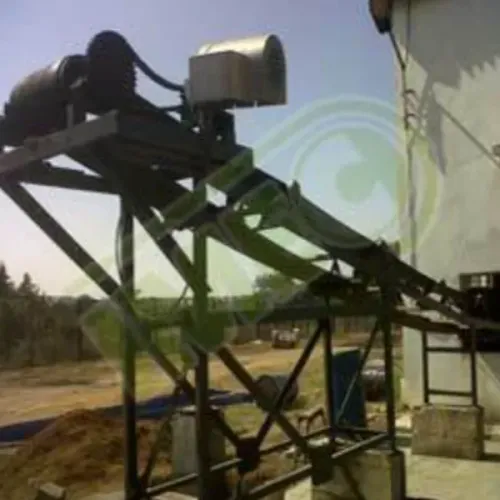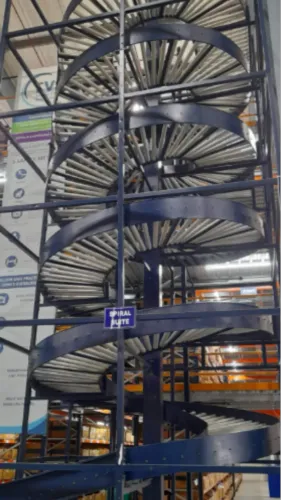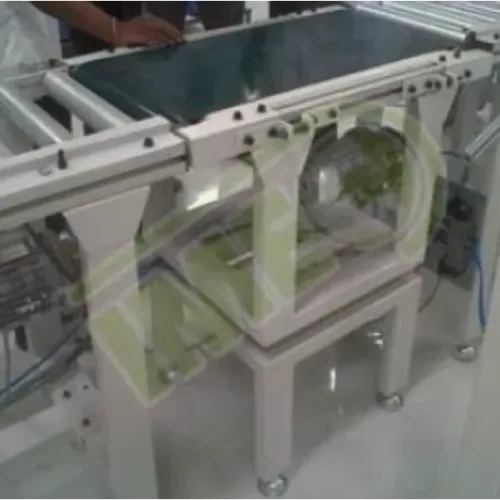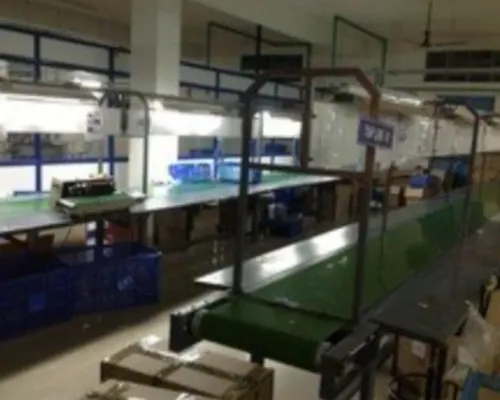
A production line does not achieve continuous output simply because a belt keeps moving. You need coordinated loading, correctly sized transfers, controlled buffering, suitable belt construction, and feedback between machines so one stoppage does not become a line-wide bottleneck. These sections show how to evaluate those decisions and specify a conveyor that can deliver the required rate.
Key takeaways
- Add buffer capacity where upstream and downstream cycle times differ.
- Calculate throughput from product rate, spacing, belt speed, and usable belt width.
- Match belt material and construction to product, temperature, moisture, and cleaning demands.
- Test transfers, guarding, emergency stops, and controls before commissioning.
How a Belt Conveyor Keeps Material Moving Between Stations
A belt conveyor maintains flow by carrying product at a controlled rate from loading through discharge, while buffers absorb brief differences between machines. Without that buffer, a filler that pauses for ten seconds can stop the upstream loader and every station behind it.
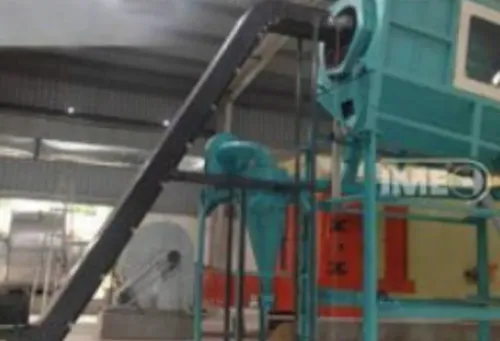
Loading must place product centrally and evenly on the belt. Poor loading creates spillage, unstable orientation, and uneven spacing that becomes a jam at the next transfer point. Chutes and nose-over points must limit drop height, contain edges, and match belt speeds; a straight run with ample capacity still fails if a transfer blocks.
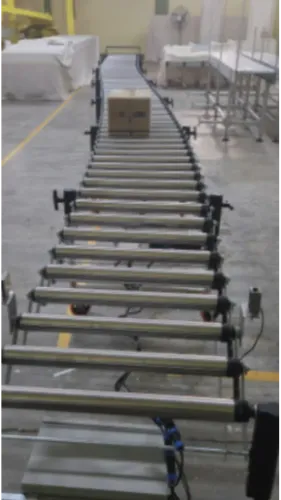
Accumulation zones provide temporary storage before or after a station. If a downstream machine stops, upstream product can continue into an accumulation zone instead of piling into the transfer. The zone needs enough length and controls to prevent compression, collisions, or unsafe back-up.
Line controls keep equipment synchronized rather than running every belt at one fixed speed:
- Photoeyes detect product presence and gaps.
- Encoder feedback confirms actual belt movement.
- Variable-frequency drives adjust speed and reduce harsh starts.
- Permissive interlocks stop feeding into a blocked downstream section.
- Jam detection identifies stalled product before the fault spreads.
Higher speed does not guarantee higher output. It increases spillage, dust, impact, belt wear, and product damage. A slower belt with controlled loading and reliable transfers often delivers more usable product. For bulk material, capacity follows Q = ρAv, but usable area depends on belt width, trough shape, loading profile, and spillage risk.
The Components and Controls That Make Flow Reliable
Predictable movement requires the conveyor belt, drive, sensing, and control logic to act as one system. A fast drive cannot correct poor tracking, uncontrolled loading, or a downstream machine that is already full.
The mechanical foundation includes:
- A drive motor sized for the belt load, incline, starts, and stops
- A gearbox that converts motor speed into usable belt torque
- A drive pulley that transmits motion without slipping
- A tail pulley that supports the return path and helps maintain tracking
- Idlers or a slider bed that support the loaded belt
- A tensioning system that prevents slack, slip, and belt wander
- A rigid frame, guards, and correctly aligned shafts
Positive-drive belts, including many wire-mesh designs, also require accurate sprocket engagement, shaft alignment, belt tension, and sprocket-wear checks.
Sensors tell the controller what the line is doing:
| Sensor | Job | Failure prevented |
|---|---|---|
| Photoelectric sensor | Detect product presence or gaps | Collision or empty transfer |
| Encoder | Confirm belt speed and position | Timing drift between stations |
| Load cell | Measure belt load | Overload and drive trips |
| Limit switch | Confirm gate or guard position | Start-up with an unsafe condition |
The programmable logic controller uses these signals to start, stop, slow, or release sections. A conventional belt is not automatically accumulation equipment: stopped products can create back pressure, deformation, belt slip, or drive overload. Use zero-pressure zones, independently driven sections, spacing control, or a clutch-based slip arrangement when buffering is required.
How to Size a Conveyor for the Required Throughput
Start with the required production rate, then convert it into a line speed and usable carrying capacity; a catalog speed alone cannot prove that the conveyor will avoid a bottleneck.
1. Define the demand in units per minute, including the planned reject rate and any short-term peak. For discrete products, calculate line speed as units per minute multiplied by product pitch, where pitch equals product length plus the required gap.
2. Check that the belt width supports the loading pattern. Leave space for edge containment, tracking variation, and safe transfer clearance; packing products across the full width can create jams even when the calculated rate looks adequate.
3. For bulk material, use Q = ρAv. Here, Q is mass flow, ρ is bulk density, A is the loaded cross-sectional area, and v is belt speed. Set A from the belt width, trough angle, loading depth, and material angle of repose—not from belt width alone.
4. Reduce the result to usable capacity by accounting for loading interruptions, incline losses, spillage, and discharge limits. A faster belt can increase dust, product damage, belt wear, and transfer-point jams.
5. Rate every transfer, chute, and nose-over point at the same or higher throughput. Control drop height, belt-to-belt speed difference, product orientation, and edge containment, because one restricted transfer becomes the line bottleneck.
6. Add accumulation or buffer capacity for expected stoppages. A conventional belt does not safely accumulate stopped products without suitable zones, independent drives, spacing control, or overload protection. Test the complete line at peak demand before approving the size.
How Product and Process Conditions Determine Belt Selection
Choose the belt from the product’s behaviour and the process environment, not from width and speed alone. A belt that carries cartons well may bruise produce, slip on an incline, or trap wash water.
1. Record product weight, dimensions, shape, fragility, surface, temperature, moisture, dust, and required orientation. Use a smooth PVC belt for many dry, packaged products; choose a PU belt where food contact, oil resistance, or frequent cleaning matters. Select a rubber belt for abrasion, heavy loads, or higher grip.
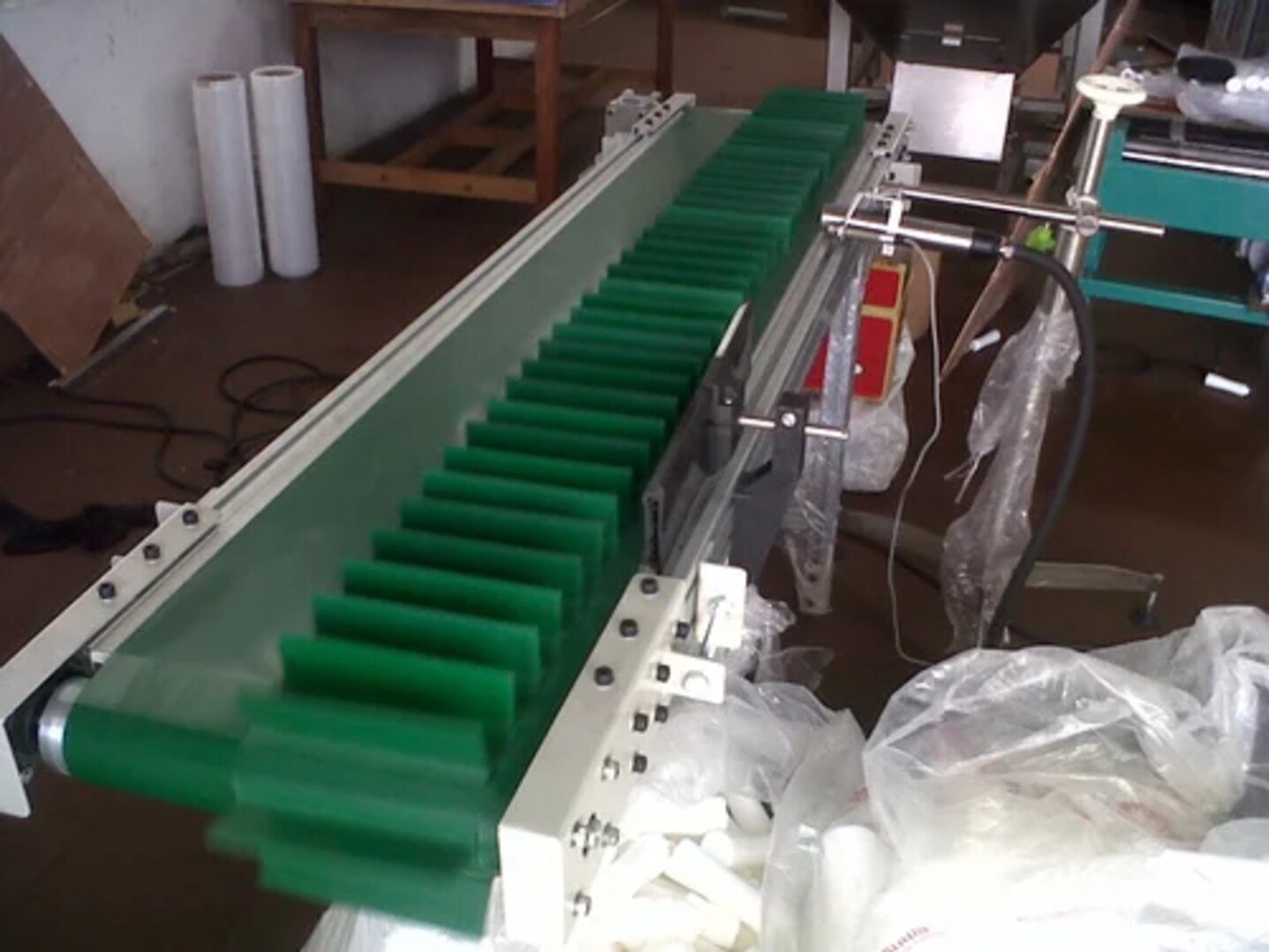
2. Match the surface to movement. Textured, ribbed, or cleated surfaces resist backsliding, while flights and sidewalls contain loose material. Incline limits depend on friction, moisture, product shape, loading depth, acceleration, and the belt profile. A smooth horizontal belt can let round or wet products roll downhill.
3. Select support from the load and product stability. Use a slider bed for continuous support of small or flexible items, or idlers and a troughed frame for bulk loads. Confirm the belt will not sag between supports or deform the product.
4. Use a modular plastic belt when washdown access, sectional replacement, or product handling around sprockets matters. Check every hinge, cross rod, sprocket, edge, and frame joint for residue traps.
5. Choose wire mesh when drainage, washing, drying, cooling, heating, or airflow is essential. Its open area can improve processing but lets small, soft, or unstable products sag or fall through; verify drainage, material compatibility, cleanability, and the applicable standard.
How to Validate Transfers, Safety, and Line Integration Before Installation
Before committing to a complete line, ask the supplier to validate the layout, operating sequence, failure response, and maintenance controls with your actual product and production rate.
1. Verify every transfer. Check transfer-point spacing against product length, sensor response time, and the stopping distance of each belt. Require drawings showing drop height, belt-to-belt speed difference, side containment, product orientation, and access for clearing jams.
2. Confirm the buffer strategy. A standard belt does not safely accumulate a stopped load; back pressure can deform products, cause belt slip, or overload the drive. If stations require buffering, specify zero-pressure accumulation with independently controlled zones, product detection, and spacing logic.
Ask how many products each zone holds and what happens when the downstream machine stops.
3. Review PLC integration before fabrication. The controls must coordinate photoeyes, encoder feedback, variable-frequency drives, permissive interlocks, jam detection, machine-ready signals, and fault states. Request an I/O list and sequence-of-operations document showing how upstream feeding stops when a transfer is blocked.
4. Test safety and isolation. Identify emergency stops and lockout/tagout points for electrical, pneumatic, hydraulic, gravity, and stored mechanical energy. Confirm guard openings, pull cords, restart delays, safety relays, and access routes against your site procedure.
Integrated Conveyors And Pacline Automation Technologies should provide these documents alongside load, speed, and layout calculations, so you can review line behaviour before installation rather than discover integration failures during commissioning.
Related products
 | BELT CONVEYOR The Transfer Line Belt Conveyor is designed for efficient and continuous material transfer between multiple process stations, machines, or packing... View product → |
 | CONVEYOR A factory without a solid base conveyor is just chaos with electricity. Flat Belt Conveyor is the backbone of any production line. View product → |
Frequently asked questions
How does a belt conveyor keep material moving between production stations?
It carries products at a controlled speed while buffer sections absorb short interruptions between machines, preventing one pause from stopping the entire line.
What components and controls make belt conveyor flow reliable?
Reliable flow depends on the belt, drive, pulleys, tracking system, tensioning method, sensors, controls, guarding, and emergency-stop devices working together.
How do you size a belt conveyor for the required throughput?
Base sizing on product rate, product spacing, belt speed, usable belt width, loading pattern, accumulation needs, and the time required for transfers.
How do product and process conditions determine belt selection?
Choose the belt according to product weight and shape, temperature, moisture, oil exposure, cleaning chemicals, incline, grip, and required sanitation.
Related products
 | BELT CONVEYOR The Sleek Belt Conveyor is a compact and efficient material handling solution designed for smooth and continuous product movement in industrial... View product → |
 | CONVEYOR FLAT BELT WITH 90 DEGREE CONVEYOR Moving material straight is easy. Turning it without stopping production is where most lines fail. View product → |
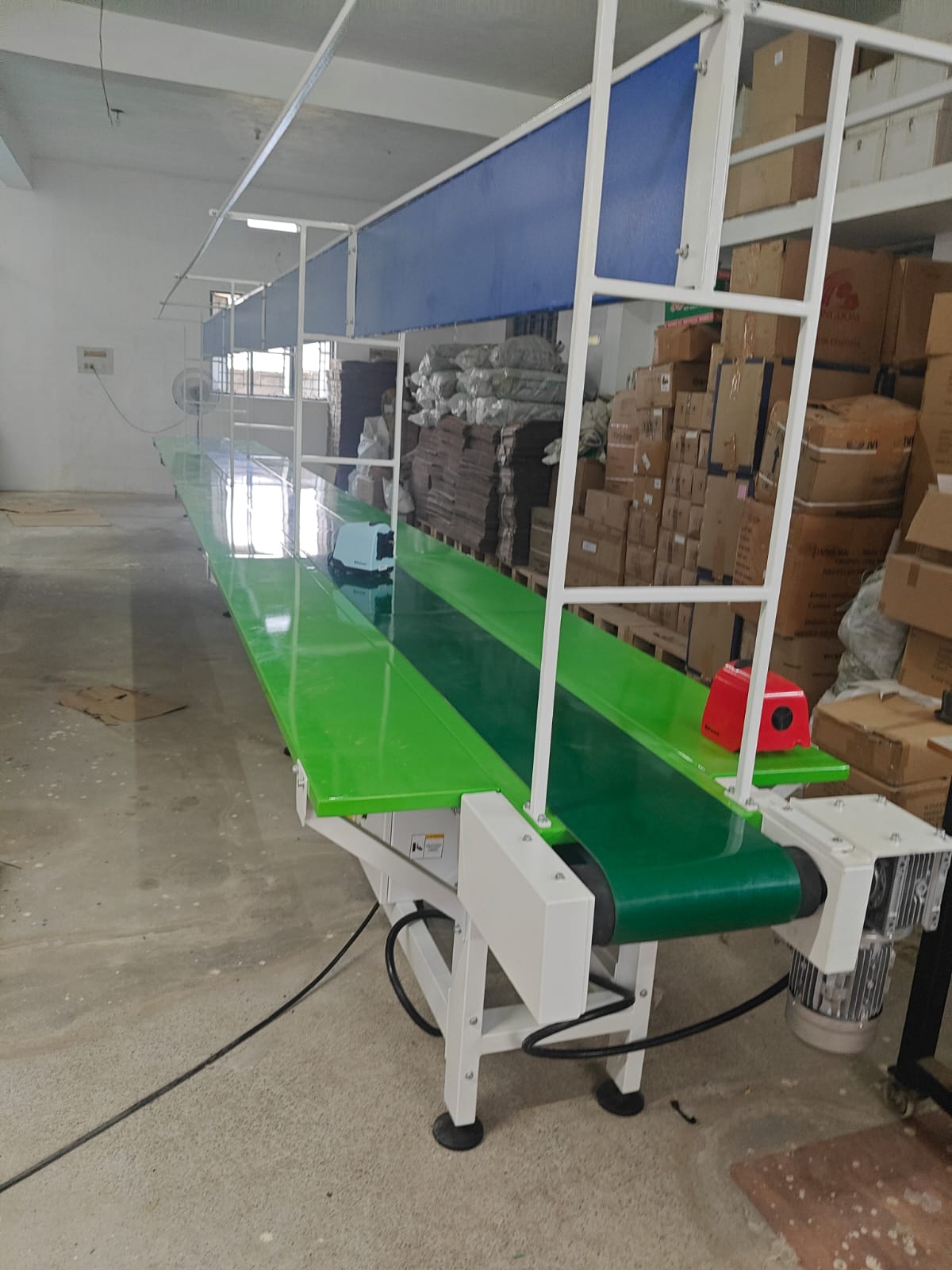 | CONVEYOR The Assembly Line Conveyor is a continuous material handling system designed to streamline production and assembly processes. View product → |
 | CONVEYOR The MS Belt Conveyor is a durable and cost-effective material handling system designed for smooth and continuous transportation of goods in... View product → |