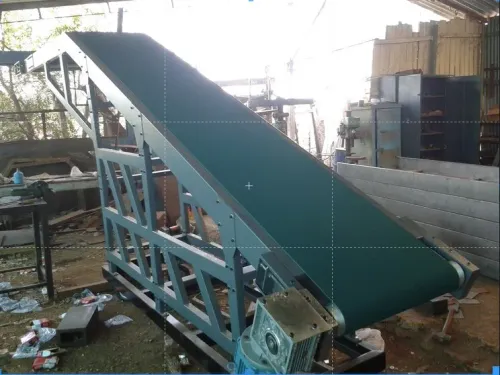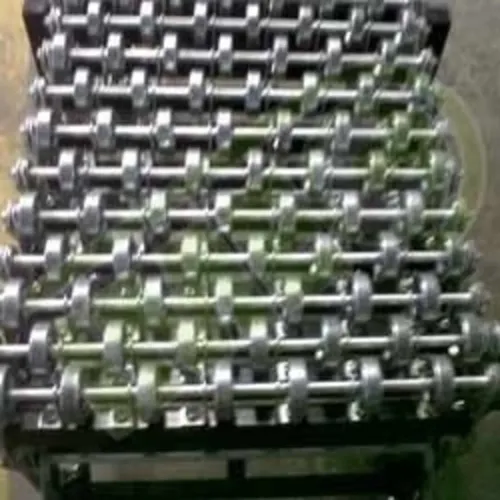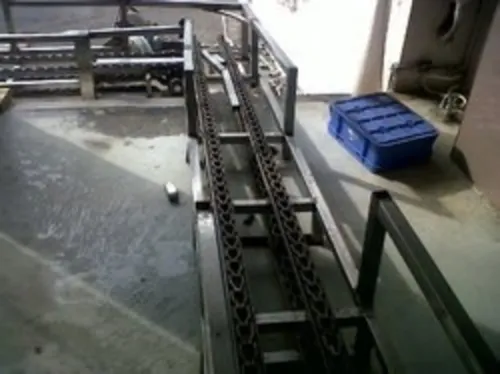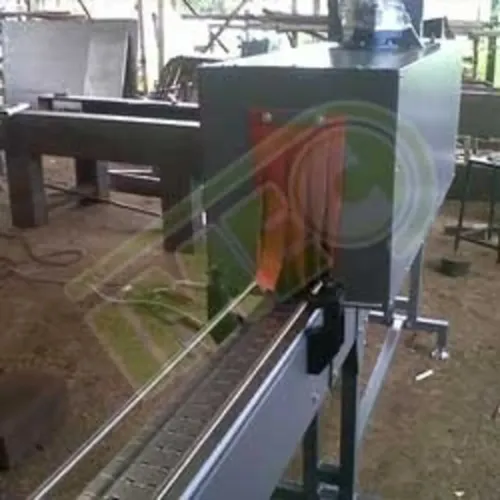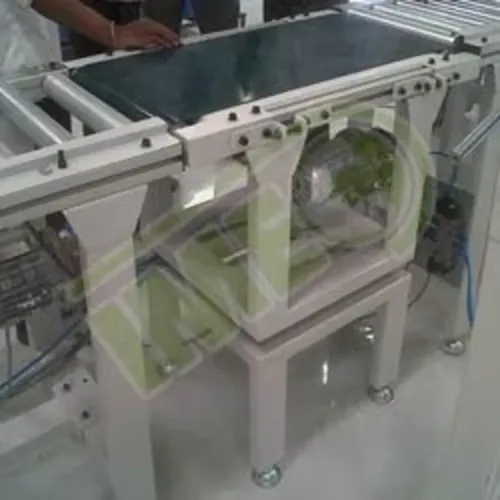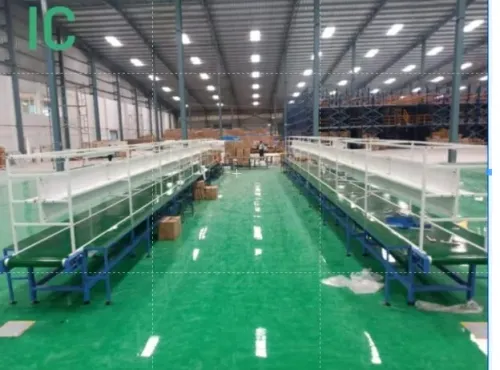
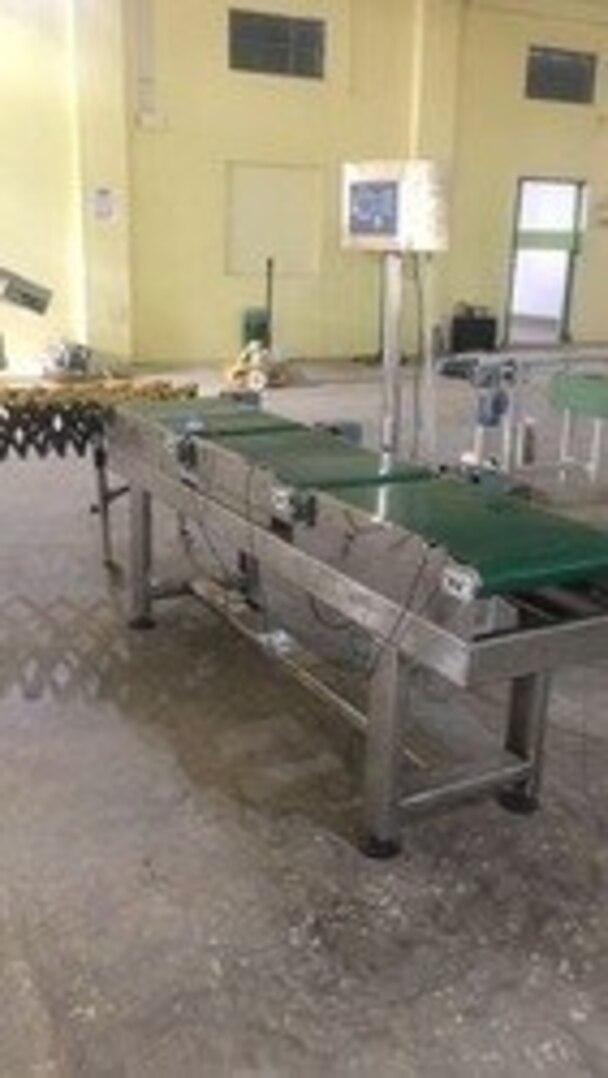
An online checkweigher estimates each package’s mass as it crosses a dedicated weighing belt, then compares that result with limits chosen for the product and process. By the end, you will know how spacing, motion, package design, reject handling, installation, and legal controls determine whether an apparent weight error is genuine or a false reject.
Key takeaways
- Separate target weight from legal minimum and control limits.
- Stabilize product spacing, belt speed, and transfer points before weighing.
- Match the reject device to package size, speed, and product risk.
- Test the complete system with real packages and line conditions.
How a package moves from infeed to a weight decision
The machine gives each package an individual weight by linking its position to a time-stamped signal from the weighing belt. An online checkweigher belt conveyor system first meters packs into a controlled gap, then transfers each pack smoothly onto the weigh section without bounce or belt-speed shock.
- Infeed metering creates product spacing and tracking so one package enters the weighing zone at a time.
- The package crosses the weighing belt while a load cell detects the downward force applied to the belt and conveyor frame.
- The controller filters vibration and uses the package’s tracked entry and exit times to calculate a stable dynamic weight.
- The result is assigned to that specific package, not to the next pack or a blended signal from two touching packs.
- The controller compares the result with the programmed limits and sends the package onward or triggers the reject device.
Speed affects the calculation. A faster belt leaves less time and fewer signal samples for the package to settle, so higher throughput requires a suitable weigh-belt length, load-cell response, gap, and accuracy target. A transfer gap, product bounce, belt vibration, acceleration, or contact with guides can corrupt an otherwise correct weight.
Verify the result under production conditions: run test packages or certified weights at the intended speed and spacing after setup, changeover, maintenance, or any disturbance to the belt, frame, or load cell.
Set the limits correctly: target, label weight, control limits, and legal minimum
Do not make the target weight the reject threshold. Set the target for the filling process, then set separate control limits that determine whether each package passes or is rejected.
| Value | Purpose | Approval |
|---|---|---|
| target weight | Desired average fill point; place it above the nominal label weight when process variation requires headroom | Production and quality |
| nominal label weight | Quantity printed or declared on the package | Packaging, quality, and regulatory |
| lower control limit | Automatic underweight-reject boundary; set it above the legal minimum when you need protection against drift | Quality and legal-metrology owner |
| upper control limit | Automatic overweight-reject boundary; use it to control giveaway or prevent an out-of-specification pack | Production and quality |
| legal minimum net quantity | Lowest permitted product quantity after tare is removed | Regulatory or legal-metrology owner |
The lower control limit, not the target weight, controls an underweight reject. The upper control limit controls an overweight reject. Process statistics can warn you about drift before individual packages cross either limit.
For net-weight control, subtract the container tare or use a validated tare-management procedure. A gross-weight limit cannot prove product content when container weights vary.
Have quality approve the limits, and have the person responsible for local legal metrology confirm the legal minimum and verification method. OIML R 51 applies to automatic catchweighing instruments; European packaged-goods rules, including Directive 76/211/EEC, add requirements for nominal quantity, tolerable deficiency, and lot control. A machine specification does not replace local approval or verification.
Prevent false rejects caused by unstable products and conveyor conditions
A correctly filled package can still produce an unstable result because an online checkweigher measures it while it is moving. If the pack is accelerating, decelerating, or still settling, the load-cell signal changes during the sampling window. The controller then calculates from a changing force rather than the package’s true mass, creating false rejects.
The transfer onto the weigh belt is a common trigger. Product bounce can lift part of the pack from the belt or make it land against a side guide. A speed mismatch between conveyors can push the package forward or drag it backward across the weigh section.
A pack that touches the next pack also shares force with it, so the machine can assign a blended or incorrectly timed reading.
Belt vibration and movement in the conveyor frame distort the signal further. Excessive belt speed reduces the time available for measurement, while a short weigh belt leaves less data for the controller to calculate dynamic weighing accuracy.
Set a controlled gap before the weigh belt, match conveyor speeds, level and rigidly support the frame, and keep the belt free of residue. Verify with production packs or certified test weights at the intended speed and spacing after setup, changeover, maintenance, or any disturbance to the belt, load cell, or surrounding equipment.
Match the reject device and controls to the package and risk
The package, speed, and consequence of a missed reject determine the device you need. A light pouch needs a different solution from a rigid carton, and a high-risk underweight pack needs stronger containment than a low-value product.
| Package type | Suitable method | Main control |
|---|---|---|
| Light pouches or small cartons | air blast reject | Use a short, controlled air pulse and a downstream sensor; excess pressure can tumble the pack or disturb its neighbour. |
| Heavy, rigid cartons | pusher reject | Use a guided stroke with enough clearance; confirm the actuator reached its end position. |
| Tall, unstable, or irregular packs | diverter | Use side guides and a controlled gap so the pack cannot rotate or strike another product. |
| High-risk rejects requiring secure containment | drop flap reject bin | Lock the bin, monitor its full condition, and prevent production when capacity is reached. |
A command is not proof of removal. Install a reject-confirmation photoeye or vision sensor after the reject point, where it detects the pack entering the reject lane or bin. Link that signal to the individual weight result and reject timing; a missed signal must generate a reject-failure alarm.
Add a reject-bin-full switch and a door or position switch where the bin is enclosed. If confirmation fails, stop the line or divert subsequent product to a controlled hold area. Test this with underweight and overweight challenge packs at minimum and maximum line speed, including empty-bin and nearly-full-bin conditions.
Maintain a clear gap between packs so tracking does not assign one package’s rejection to the next.
Specify and install the system using your real product and line conditions
Before you compare checkweigher specifications, give each supplier the actual product, packaging, and line conditions. A maximum capacity rating does not predict usable dynamic accuracy.
1. Provide the product data: pack weight and dimensions, material, centre of gravity, surface, temperature, residue, and whether the requirement is gross weight or net contents. For net weight, state the container tare and how tare variation will be measured or controlled.
2. State the required weighing range and resolution, legal or internal weight limits, packs per minute, product spacing, belt speed, and expected changeover formats. Include conveyor height and belt width, plus the available infeed and discharge lengths.
3. Ask for a trial using your real packs at production speed and spacing. Check whether the product settles fully on the weigh belt; acceleration, bouncing, guide contact, vibration, airflow, and insufficient spacing can turn a suitable static specification into unstable readings.
4. Verify the installation site: a level, rigid frame; firm floor support; protection from nearby motors and conveyors; clean belt access; and enough clearance for the chosen reject device, reject bin, and maintenance.
5. Commission with certified test weights and representative packs moving at the intended speed. Record results after setup, changeover, maintenance, belt-tension adjustment, load-cell work, or disturbance to surrounding equipment.
Integrated Conveyors And Pacline Automation Technologies can use these measurements to configure the conveyor around the product and existing line, rather than selecting a weigh belt from capacity alone. Require reject confirmation and a controlled stop or diversion if removal fails.
Related products
 | Online Check Weigher Online Checkweigher Belt Conveyor System Our range of checkweighers ensure consistent pack weight with a choice of reject mechanism for bags, cartons, boxes or sachets that fall out of the... View product → |
 | CONVEYOR This isn’t just a conveyor with a weighing scale slapped on. A checkweigher system is a precision setup designed to measure product weight in motion... View product → |
Frequently asked questions
How does an online checkweigher decide whether a package is underweight?
The system meters each package onto a weigh belt, links its position to a time-stamped weight signal, and compares the result with configured limits.
What weight limits should you set on a checkweigher?
Define the target weight, declared label weight, internal control limits, and legal minimum separately so operators know which limit triggers action.
Why does a checkweigher produce false rejects?
Unstable products, poor spacing, belt-speed changes, vibration, and transfers that cause bounce can distort the individual package weight.
How do you choose a checkweigher reject device?
Match the reject method to package dimensions, weight, line speed, spacing, product fragility, and the consequences of removing a failed pack.
Related products
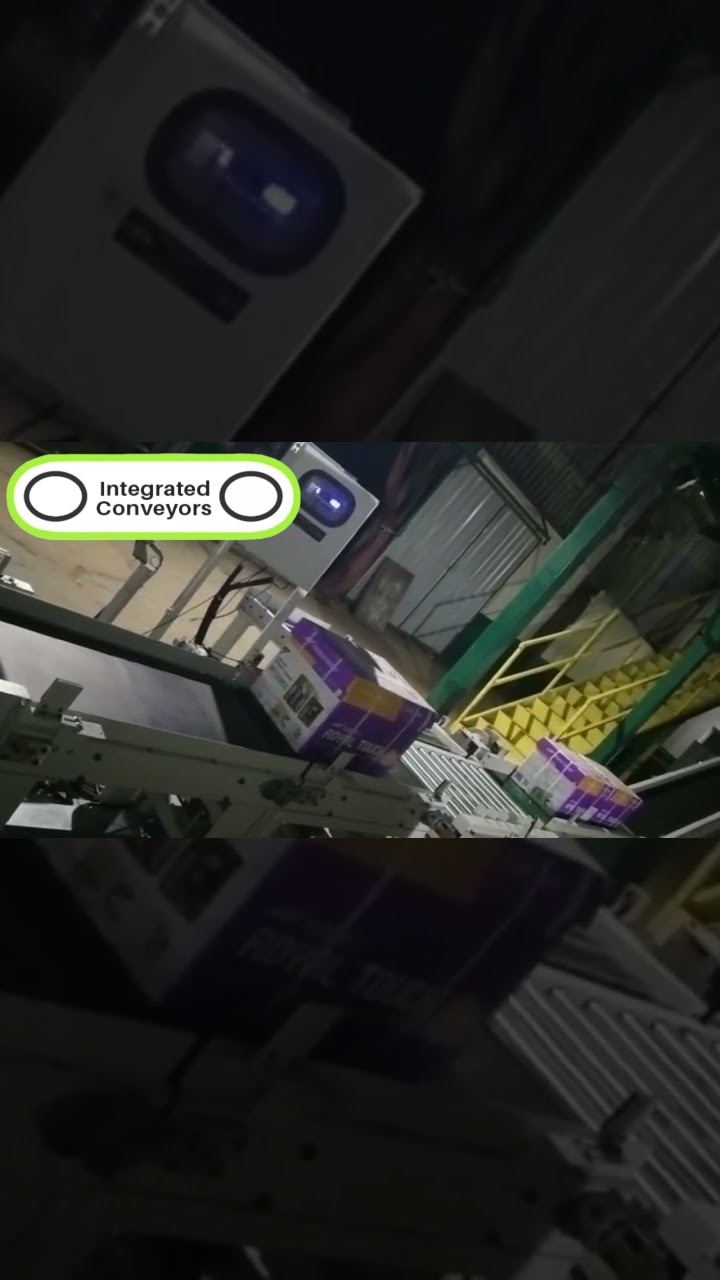 | Conveyor Real-Time Weight Inspection Without Stopping the Line Our Online Check Weigher Conveyor is an advanced, fully automated system designed to weigh... View product → |
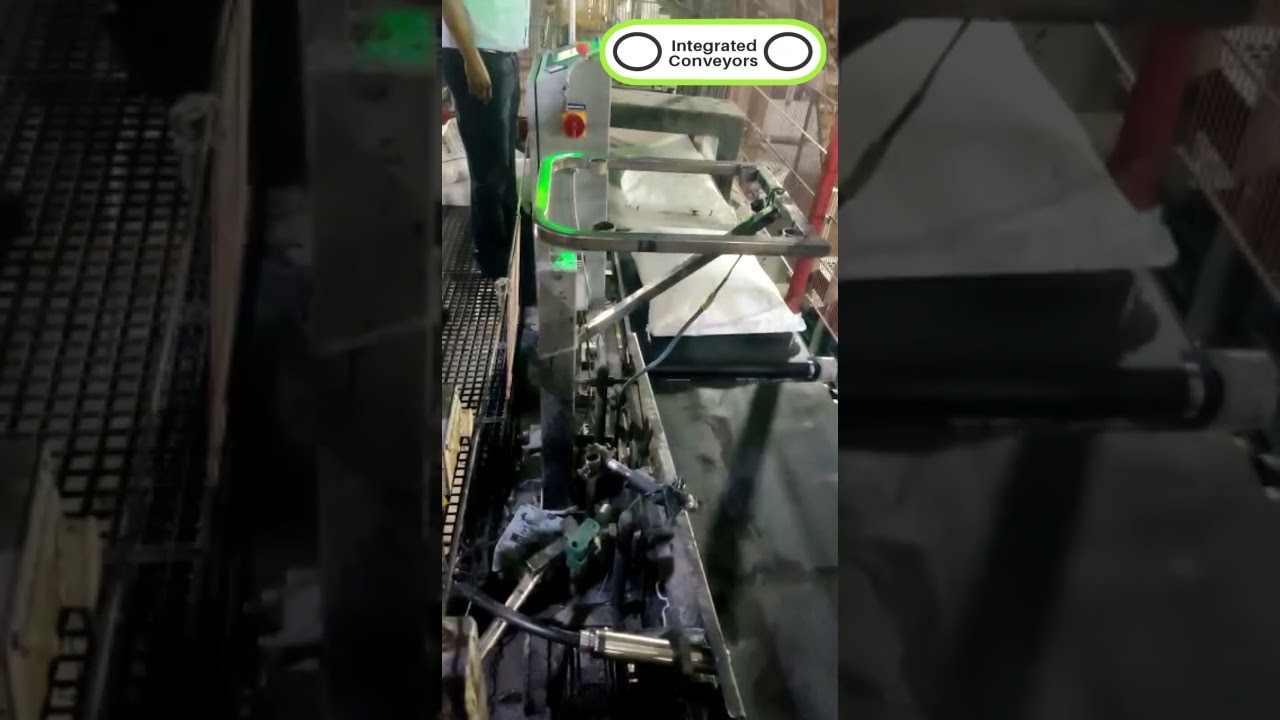 | Conveyor Conveyor – Precision Weight Control in Motion Our Check Weighing Scales Conveyor is a high-accuracy, automated weighing system designed to verify... View product → |
 | Online Check Weigher Conveyor System Check weighers are systems used to assure compliance with label weight regulations and to minimize product giveaway. View product → |
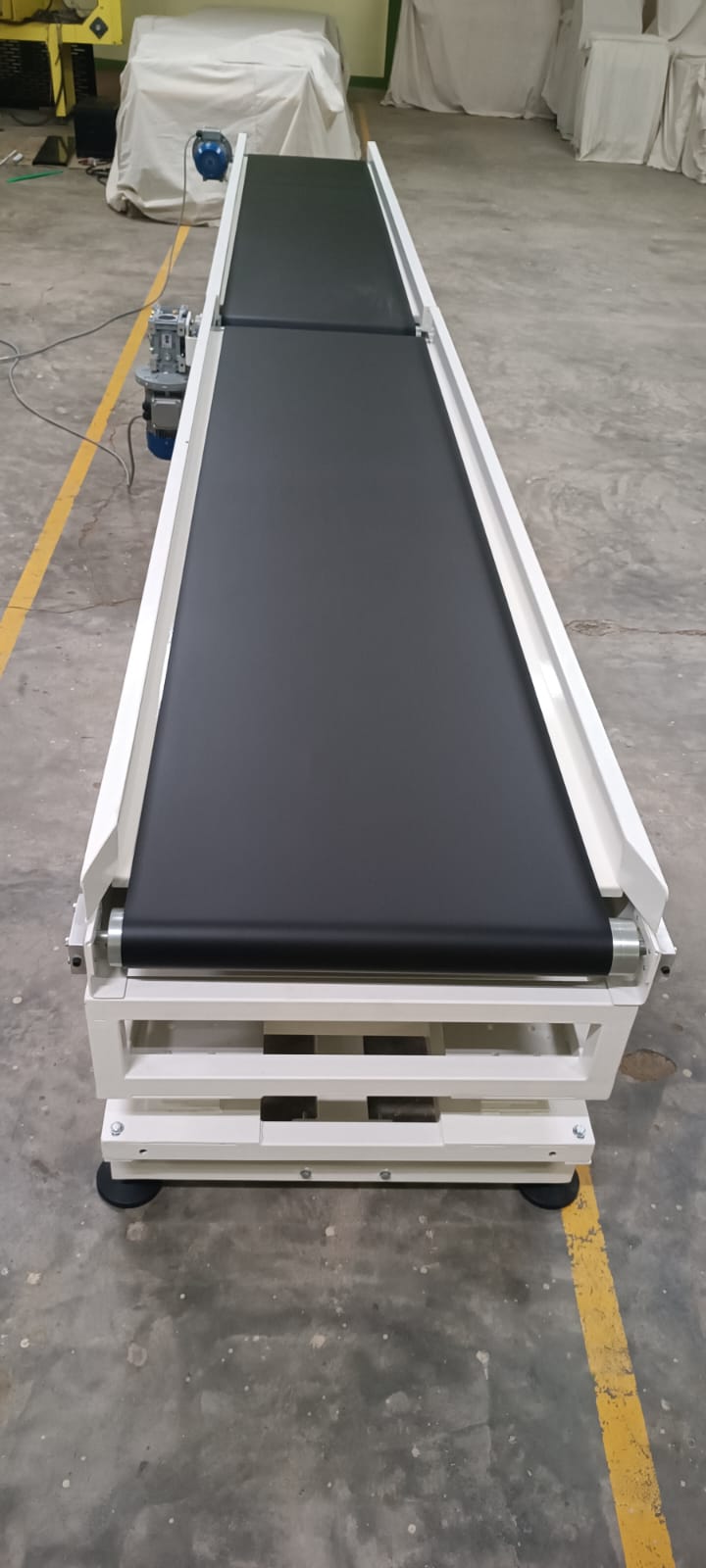 | CONVEYOR MS Checkweigher Belt Conveyor is designed for accurate weight verification and product inspection in production and packaging lines. View product → |