A furnace setpoint alone does not tell you whether a part has reached the required temperature or cooled at the required rate. By the end, you will be able to match the heat-treatment method to the material, specify the thermal cycle, verify the load temperature, and compare chamber features that protect quality during production.
Key takeaways
- Set heating, soaking and cooling around the material’s required thermal cycle.
- Measure load temperature, not only the controller’s air temperature.
- Match chamber length and conveyor speed to soak time and production rate.
- Control atmosphere, insulation and cooling to prevent oxidation and thermal shock.
What annealing changes—and how it differs from other heat treatments
Annealing reduces residual stress, restores ductility and improves dimensional stability after cold forming, welding, casting or machining. Without it, uneven internal strain can cause a part to warp, crack or change size during later processing. The result depends on the complete thermal cycle: heating, soaking and cooling.
- Choose full annealing when you need a softer, more workable carbon-steel structure. Heat into the austenite range, soak through the section, then furnace-cool slowly; faster cooling can preserve hardness and create distortion.
- Choose stress relieving when the main problem is locked-in stress but you must retain most of the existing microstructure and strength. Its lower temperature does not produce the same softening as full annealing.
- Choose tempering after hardening when you need to reduce brittleness while retaining useful hardness. Tempering is not a substitute for annealing before forming or machining.
- Choose normalising when carbon steel needs grain refinement and higher strength than a fully annealed condition. Air cooling is faster than furnace cooling, so it produces different properties and greater thermal gradients.
- Choose solution annealing for alloys such as stainless steel or aluminium when you need to dissolve precipitates or segregated phases before rapid cooling or ageing.
- Choose hardening when increased wear resistance or strength matters more than maximum ductility. Quenching creates the rapid temperature change that annealing deliberately avoids.
Specify cooling as carefully as temperature. Furnace, controlled-air, inert-gas and liquid cooling produce different gradients; an aggressive cooling zone can introduce cracking or distortion into a part that slow cooling would stabilise.
How to build the heating, soaking and cooling cycle
Start with the material grade and the result you need, not with the chamber’s maximum temperature. The grade, prior cold work, section thickness, batch size and target properties determine the heating rate, soak time and cooling schedule.
1. Select the temperature from the grade’s heat-treatment specification. A carbon-steel full anneal enters the austenite range, while stress relieving uses a lower temperature and produces a different structure. Do not substitute one recipe for the other.
2. Set the heating rate to limit temperature differences between the surface and core. Use a slower ramp for thick, complex or tightly packed parts; thin, widely spaced parts tolerate a faster ramp when the specification permits it.
3. Define soak time after the coldest part reaches the required temperature, not when the controller first reaches its setpoint. Base the duration on section thickness, load arrangement and the time needed for the required transformation or stress reduction.
4. Choose the cooling rate with the target properties and geometry in mind. Furnace cooling gives a slower cycle; controlled air or inert-gas cooling removes heat faster. Excessive cooling creates thermal gradients, distortion, residual stress or cracks.
5. Convert the cycle into chamber zones and belt speed. Preheat, heat, soak and controlled cooling zones must provide the required residence time for the full load. A heavier batch or faster belt can leave its coldest parts underprocessed.
Verify the recipe with load thermocouples on representative thick and thin parts. Record the actual cycle, then adjust belt speed, loading pattern or zone temperatures when production loads change.
Why load temperature matters more than the controller display
A controller display shows the chamber air temperature, not the load temperature. Confirm uniform heating by attaching calibrated thermocouples to representative workpieces and recording their readings through the complete cycle.
Use temperature mapping to identify hot and cold locations before approving production. Place sensors at the belt centre and edges, on the top and bottom layers, and on parts that are nested, shielded, thick, or in direct contact with neighbouring parts.
A survey of the empty chamber describes spatial uniformity; it does not prove that a loaded part reaches the required temperature.
- Run the loaded chamber at the intended belt speed, loading pattern, and product thickness.
- Attach thermocouples to the surfaces or internal locations most likely to lag, then protect the wires from movement and abrasion.
- Use data logging to capture ramp time, soak time, cooling rate, and the temperature spread between sensor locations.
- Compare each trace with the approved process limits, including the minimum time every monitored part remains at the target temperature.
A cold centre can persist when the chamber display is correct because dense loads absorb heat slowly. During cooling, high-velocity air can chill exposed edges and the top layer faster than nested parts, so check fan settings, nozzle direction, spacing, and belt-width uniformity.
Repeat the survey after changing load size, belt speed, or cooling controls; those changes alter the actual thermal cycle.
Which chamber and conveyor features control the production cycle
Compare the chamber as a sequence of thermal zones and the conveyor as a metering system, not as a box rated only by its maximum temperature. Preheat, heat, soak, controlled cooling and discharge each need enough length and control authority for the actual load.
| Hardware | What to compare | Production consequence |
|---|---|---|
| Thermal zones | Independent heaters, sensors and controls for each zone | A short soak zone or weak cooling zone limits belt speed and changes properties |
| Wire mesh belt | Mesh opening, wire diameter, pitch, edge construction and support spacing | Small parts can fall through or touch supports; dense loads can block heat transfer |
| Belt drive | Speed range, feedback control, tracking and rated load | Belt speed determines residence time; loss of tracking creates gaps, rubbing or stoppages |
| Cooling section | Fan control, nozzle arrangement, airflow direction and widthwise uniformity | Forced-air circulation can overcool exposed edges while shielded parts remain hot |
| Loading hardware | Side guides, fixtures, separators and maximum belt loading | Overloading delays the coldest pieces even when chamber temperatures look correct |
Estimate nominal residence time by dividing heated-zone length by belt speed, then validate it with loaded trials. Compare performance at the heaviest, thickest and most closely packed condition you will run; an empty-belt profile proves little.
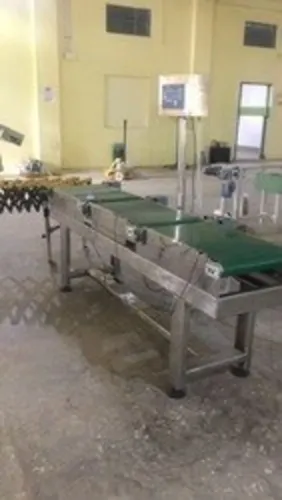
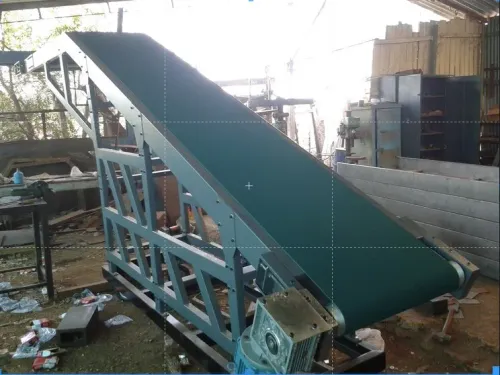
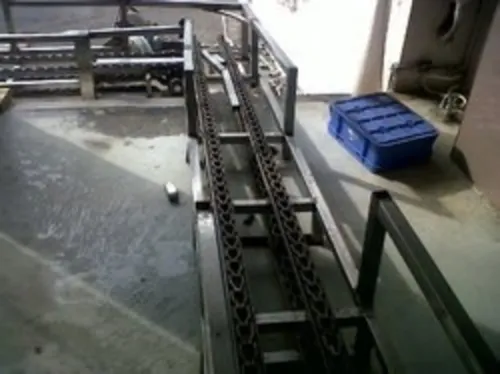
Ask the supplier to document usable belt width, maximum distributed load, temperature uniformity across that width and speed adjustment under load. Integrated Conveyors And Pacline Automation Technologies can be evaluated on these same interface details when its conveyor and chamber equipment must work as one production line.
Related products
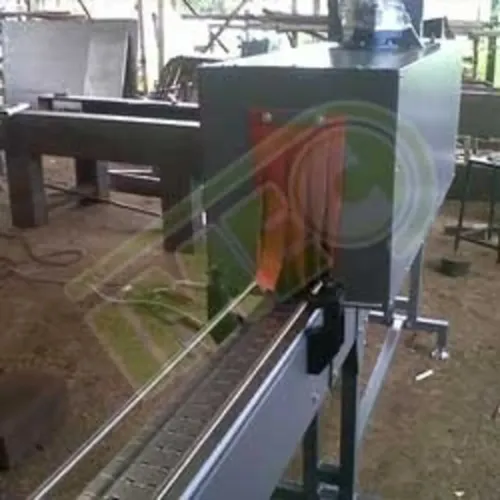
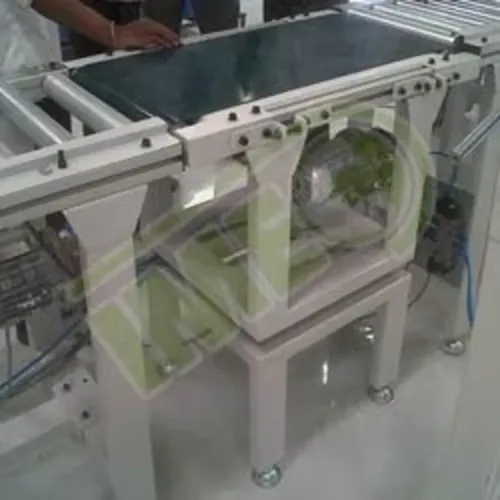
 | Bestowed with an ingenious team of designers and advanced production unit, we have been able to introduce an exclusive range of Annealing Chamber. View product → |
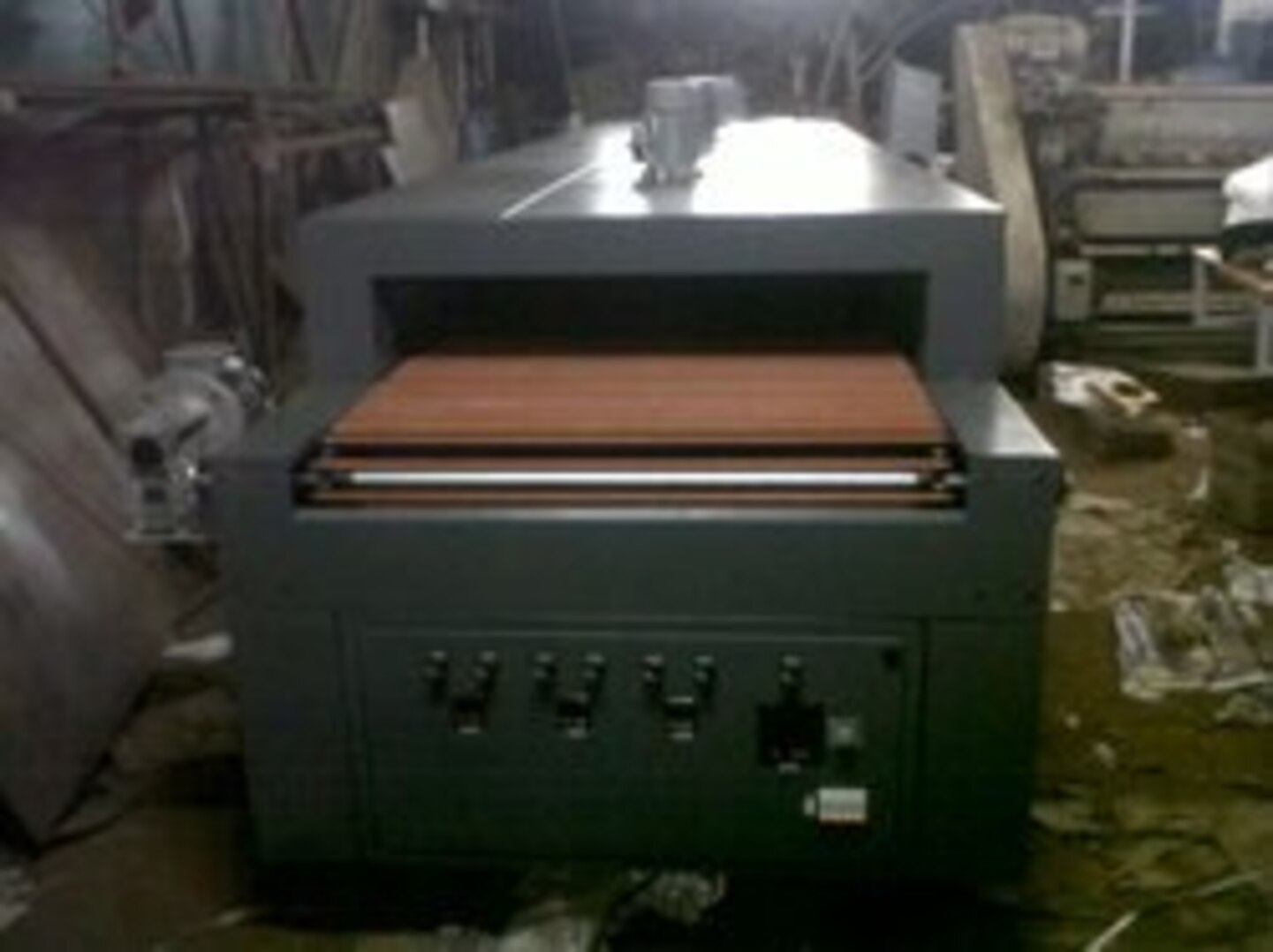
 | Annealing Hot Chamber For Shoes Our organization takes pleasure to introduce its business as one of the leading entity offering Annealing Chamber Furnace. View product → |
How atmosphere, insulation, cooling and safety protect the result
A cold exterior wastes heat, while an overheated wall creates a burn hazard. Effective chamber insulation keeps heat in the work zone, reduces burner demand and protects the structure around the furnace. Inspect door seals, expansion joints and damaged lining; air leaks increase energy use and disturb temperature uniformity.
A protective atmosphere limits oxidation and scaling, and it can reduce decarburization in ferrous alloys. Gas chemistry and dew point determine the surface result, while furnace pressure and leakage control determine whether air enters the chamber. Nitrogen, hydrogen-containing gas, dissociated ammonia, endothermic gas and vacuum are process choices, not interchangeable utilities.
An accurate temperature profile cannot prevent scale caused by air ingress.
Furnace cooling must match the required cooling rate and the load geometry. Use a controlled cooling zone rather than an uncontrolled open discharge when surface condition or material properties depend on the descent in temperature.
Check airflow distribution, fan capacity and belt clearance: hot mesh belts expand, sag or rub, creating tracking failures and uneven cooling.
Combustion equipment needs safeguards beyond a temperature controller. Apply NFPA 86 as the principal U.S. reference, then confirm requirements for the furnace construction, fuel and process hazards. Verify that the system provides:
- Combustion-air and fuel supervision
- Purge logic before fuel admission
- Ignition sequencing with proven safe conditions
- Flame-failure shutdown
- Fuel isolation when ignition or airflow is not proven
Test these interlocks; a failed sensor or valve must put the furnace in a safe state, not continue heating.
Frequently asked questions
What does annealing change in a material?
Annealing reduces residual stress, restores ductility and improves dimensional stability after forming, welding, casting or machining.
How do you build an annealing heating and cooling cycle?
Define the heating rate, target soak temperature, soak duration and controlled cooling rate for the material and part geometry.
Why does load temperature matter more than the controller display?
The controller usually measures chamber air near a sensor, while the load may heat more slowly and require additional time to reach the target temperature.
Which chamber features affect the production cycle?
Chamber length, heating zones, insulation, conveyor speed, temperature sensors and cooling sections determine residence time and thermal uniformity.
How do atmosphere and cooling protect annealed parts?
Controlled atmosphere limits oxidation, insulation reduces heat loss, and staged cooling reduces thermal gradients, distortion and thermal shock.