A self-aligning belt conveyor is not defined by a product label or a polished photograph; its value depends on the tracking arrangement, conveyor geometry, load, and maintenance access. By the end, you will know how to specify the equipment, compare quotations, test alignment claims, and shortlist a supplier in Coimbatore.
Key takeaways
- Ask for belt width, speed, load and material details before requesting a quotation.
- Check conveyor length, transfer points, incline and available floor clearance.
- Compare frame, idler, drive, guarding, controls and installation scope—not price alone.
- Verify a Coimbatore supplier’s drawings, testing process, service coverage and replacement-parts support.
How self-aligning belt conveyors correct belt wander
Self-aligning operation means the conveyor actively nudges a wandering belt back towards the centreline. A self-aligning troughing idler pivots as the belt moves off-centre, changing the contact angle and generating a corrective steering force.
A return trainer or steering pulley performs the same job beneath or around the belt; it does not change the belt-conveyor principle.
The arrangement can also use crowned pulleys, guide rollers, tracking frames, or sensor-controlled actuators. For self aligning belt conveyors in coimbatore, ask the supplier to state exactly which device is included, where it is installed, and how many trainers the quotation covers.
A trainer can correct gradual sideways movement caused by minor running variation. It cannot repair the underlying fault when the belt keeps walking to one side. Check for:
- Pulley shafts that are not square or parallel
- A conveyor frame that is twisted or misaligned
- Off-centre loading, seized idler rolls, or unequal belt tension
- Material build-up on pulleys or an uneven belt splice
Commission the conveyor with centred loading, clean pulley surfaces, free-running idlers, correct take-up tension, and a sound splice before increasing trainer activity. A fixed side roller only restrains the edge; it can fray the belt and narrow the usable loading space.
Request a GA drawing that verifies the trainer arrangement, pulley centres, loading point, and maintenance clearance.
The checks that decide whether a sleek conveyor will fit
Confirm dimensions, load, product behaviour, and operating conditions before treating a “sleek belt conveyor in Coimbatore” as a suitable machine. A narrow exposed frame can still fail if its transfer gap, pulley diameter, or maintenance access does not match your line.
- Record the product’s size, weight, shape, surface, and risk of sticking or spilling. State load per metre, belt speed, conveyor length, incline, loading method, discharge height, operating hours, ambient temperature, dust, moisture, and washdown requirements.
- Measure the available floor length and width, existing machinery, columns, walkways, and overhead obstructions. Confirm overall width, belt width, frame height, exposed profile, transfer height, and whether the frame must pass under equipment.
- Check every transfer: product gap, belt-to-belt height difference, chute angle, skirt-board space, and discharge clearance. A belt that fits the floor plan can still drop small products into a wide transfer gap.
- Ask for a GA drawing, not just a photograph. It must mark pulley centres, loading and discharge points, take-up, skirt boards, guards, maintenance clearances, and the location and quantity of self-aligning troughing idlers, return trainers, or steering pulleys.
Also request the proposed pulley diameter and belt splice method against your product and incline. The quotation must identify the exact trainer arrangement, belt and idler specifications, and motor-gearbox model. Leave room to remove an idler, clean under the belt, and inspect the tracking parts; cramped access turns routine alignment work into downtime.
When to choose self-alignment over other conveyor designs
Choose self-aligning when belt wander returns after you correct the frame, pulley shafts, loading point, splice, idlers and belt tension. Training idlers, return trainers or steering pulleys then provide continuous correction; they do not repair a seized roll, dirty pulley or unevenly tensioned belt.
| Option | What it does | Choose it when |
|---|---|---|
| Self-aligning belt conveyor | Uses a pivoting trainer or steering pulley to correct wander | The belt needs automatic correction during changing loads or long operating hours |
| Flat belt conveyor | Uses a plain bed or standard idlers without active tracking | Loads are light, centred and the conveyor is short and easy to inspect |
| Crowned pulleys | Passive crown encourages the belt towards the pulley centre | Tracking is stable and the belt, width and pulley crown are correctly matched |
| Roller conveyor | Carries rigid products on powered or gravity rollers rather than a continuous belt | Boxes, totes or pallets need accumulation, not loose or irregular material |
| Cleated conveyor | Uses raised cleats to prevent products sliding on an incline | You need elevation or separation; cleats do not solve belt wander |
| Fixed side guides | Push the belt edge or product against a stationary guide | The load needs lateral containment and belt-edge contact is acceptable; excessive contact can fray the belt |
| Sensor-based tracking | Detects belt position and moves an actuator or steering unit | Wide, high-value or critical conveyors justify controls, sensors and maintenance expertise |
Do not pay for automatic tracking before checking alignment. Ask the quotation to identify the trainer type, quantity and locations on the GA drawing; a product photograph cannot prove the arrangement.
How to compare self alignment belt conveyor price
Compare self alignment belt conveyor price only after normalising the scope and design basis. A low quotation may exclude the training arrangement, transfer chutes, installation or commissioning rather than offer a cheaper equivalent machine.
| Quote line | What to specify | Why it changes cost |
|---|---|---|
| Structure | Length, width, lift, incline, frame and maintenance clearances | Steel quantity and fabrication |
| Tracking | Self-aligning troughing idlers, return trainers, steering pulleys, or guide rollers; state quantity and locations | These are not interchangeable systems |
| Drive | Motor, gearbox, coupling, brake, controls and electrical panel | Power and automation scope vary |
| Belt and support | Belt grade, belt width, pulley diameters, lagging, idlers or impact bed | Abrasion and loading affect service life |
| Containment | Chutes, skirt seals, guards and dust-control provisions | Poor sealing creates spillage and cleanup cost |
| Delivery | Freight, erection, taxes and commissioning listed separately | The installed cost can exceed the equipment price |
Request a GA drawing, not just a product photograph. It should show pulley centres, loading and discharge points, take-up, trainer locations, skirt boards, guards and access clearances.
Give the supplier the operating conditions below, then compare like-for-like quotations:
- Capacity in tonnes per hour, belt speed, belt width and bulk density
- Lump size, fines content, moisture, temperature and abrasiveness
- Conveyor length, lift, trough angle, operating hours and washdown needs
- Upstream and downstream interfaces, installation conditions and power supply
Ask the quotation to cite IS 11592 design assumptions. Separate factory checks from site acceptance: loaded capacity, spillage, belt drift, emergency stops and equipment interfaces belong in commissioning.
Where to buy and how to check a Coimbatore supplier
Before you pay a belt conveyor supplier in Tamil Nadu, require documents that prove the proposed machine fits your line, not just photographs of a similar model.
1. Request a GA drawing showing belt width, frame height, overall width, pulley centres, loading and discharge points, take-up, training-idler locations and quantity, skirt boards, guards, transfer gaps, and maintenance clearances. For a low-profile frame, require the minimum pulley diameter and belt construction; a smaller pulley can shorten belt life.
2. Request a component schedule naming the belt specification, splice method, motor and gearbox make and model, bearings, idlers, pulley lagging, electrical controls, and spare parts. Ask for recommended preventive-maintenance intervals and every warranty exclusion in writing.
3. Request the inspection and trial-run procedure. Factory testing should record dimensions, pulley rotation, belt tracking, guarding, and no-load operation. Site acceptance must additionally test loaded capacity, spillage at transfer points, emergency stops, belt drift, and connection to your upstream and downstream equipment.
4. Require commissioning checks for square and parallel pulley axes, centred loading, free-running idlers, correct take-up tension, clean pulley surfaces, and splice condition before relying on automatic trainers.
Integrated Conveyors And Pacline Automation Technologies belongs on your comparison list only after it supplies this evidence in a comparable format. If you plan to buy belt conveyors in Coimbatore, treat missing drawings, unnamed components, or an acceptance test limited to no-load running as reasons to pause the order.
Related product
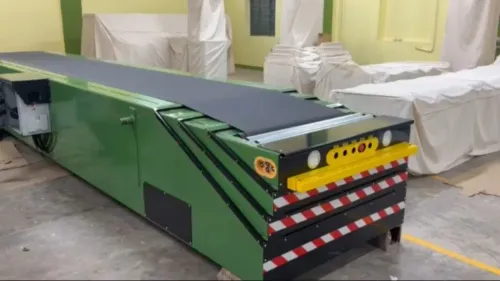
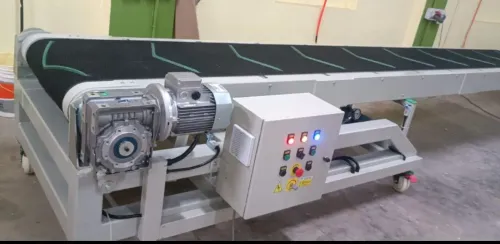
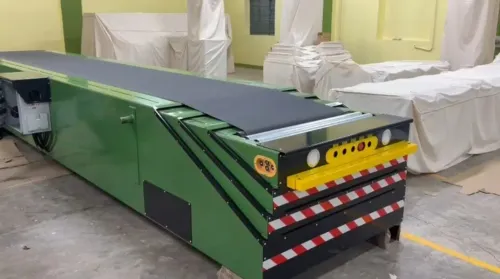
 | CONVEYOR SLEEK SELF ALIGNMENT BELT CONVEYOR The Sleek Self-Alignment Belt Conveyor is a precision-engineered material handling system designed for smooth, stable, and continuous conveying... View product → |
Frequently asked questions
How do self-aligning belt conveyors correct belt wander?
A pivoting self-aligning troughing idler changes the belt’s contact angle and steers the belt towards the centreline.
What checks decide whether a sleek belt conveyor will fit?
Check belt width, conveyor length, load, speed, transfer points, incline, discharge height, floor space and maintenance access.
When should you choose self-alignment over another conveyor design?
Choose self-alignment when belt tracking is a recurring problem and the conveyor layout, loading pattern and material suit a guided belt system.
How should you compare self alignment belt conveyor price?
Compare the complete scope, including frame, belt, idlers, drive, controls, guarding, installation, commissioning, freight and spare parts.
How can you check a belt conveyor supplier in Tamil Nadu?
Review engineering drawings, testing procedures, installation references, service response, spare-parts availability and the supplier’s ability to customise the system.
Keywords