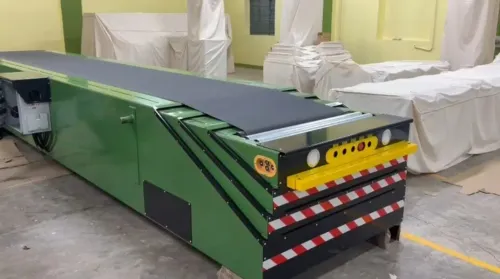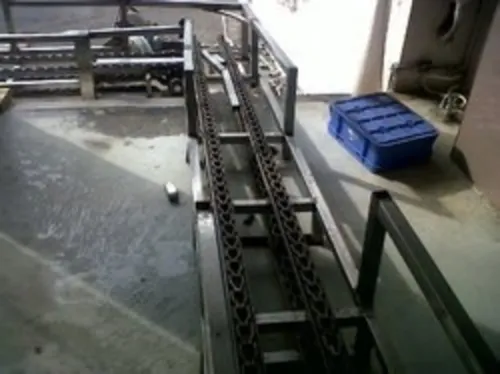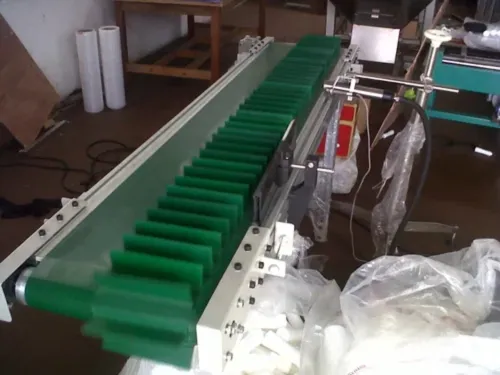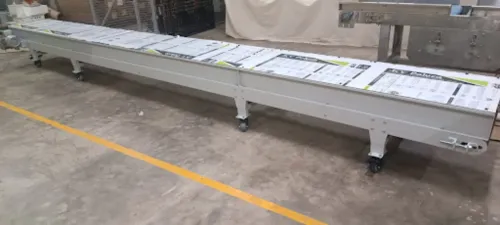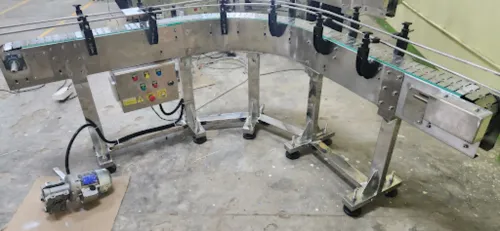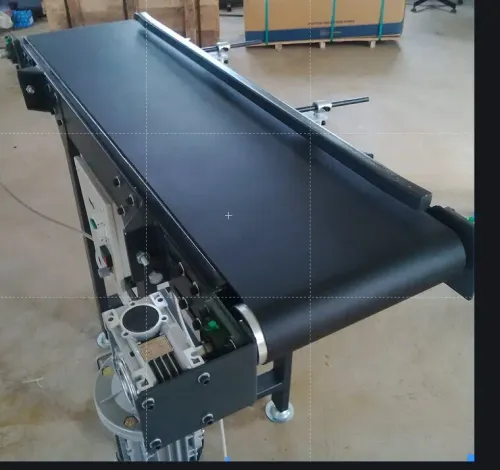
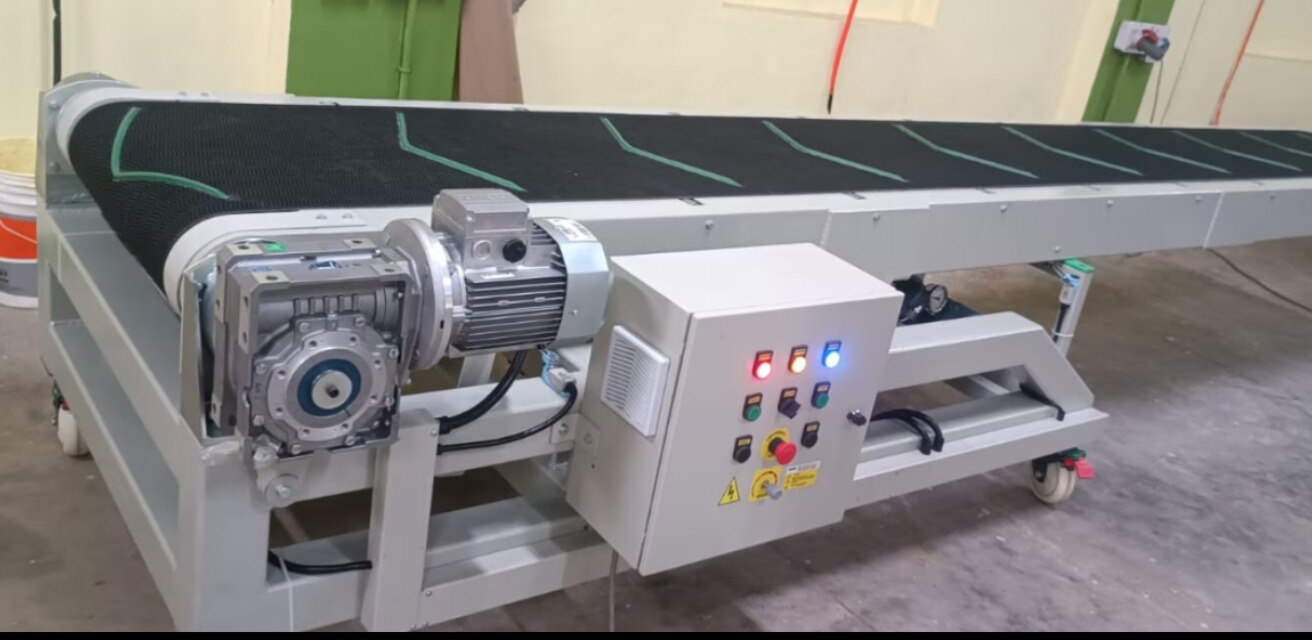
A product reaches each station reliably only when its position, orientation, timing and handoff are controlled from loading to discharge. By the end, you will be able to map the movement sequence, specify the hardware and performance data, and identify whether a proposed layout will survive stoppages, product variation and maintenance demands.
Key takeaways
- Set product pitch and orientation before the first station.
- Use sensors, stops and controls to confirm each handoff.
- Check footprint, product dimensions, speeds and transfer heights before installation.
- Add accumulation and recovery logic for stopped stations.
What happens to the product at each station?
The product is loaded with a defined gap and orientation, then moved through a compact conveyor system process of conveying, stopping or accumulating, processing, transferring and discharging. An operator or upstream machine establishes the initial pitch; guides, stops or a datum surface preserve it.
1. Load: Place each product on the infeed at the specified position. Record its length, orientation and loading reliability.
2. Convey: Use continuous travel when the product can remain moving, such as during visual inspection or steady dosing. Use indexed movement when drilling, filling, assembly, testing or packing requires the product to stop at a defined datum.
3. Stop or accumulate: A stop holds the product for the required dwell time. An accumulation zone prevents an upstream product from pushing into a blocked station.
4. Process or inspect: The workstation performs its operation while the product remains moving or stationary. The station sequence must record operation time and handoff height.
5. Transfer: Release the product only when the next station is ready. Check the smallest product against the discharge pulley, nose bar, dead plate or transfer gap; add a side guide, end transfer, reject lane or buffer when the product could rotate, bridge or fall.
6. Discharge: Confirm the product has cleared the exit before sending the next one onward.
Line rate depends on product pitch, gap, loading reliability and the slowest station, not belt speed alone. For indexed work, the longest station cycle governs output. Map the infeed point, stop position, operation time, release condition, transfer direction and next station before selecting the layout.
How do sensors and controls coordinate every handoff?
One product advances only when the next station is ready to receive it. The control chain uses sensor confirmation, repeatable positioning and machine-to-machine handshakes so a small conveyor system for production does not feed a blocked station.
Photoelectric sensors detect product-present, entry and exit conditions. Validate their placement with the actual product range: colour, reflectivity, transparency, dust, vibration and background surfaces can cause missed or false detections.
Mechanical stops, side guides and datum surfaces establish the product’s position. The drive, gearbox, brake and acceleration profile then move the belt, timing belt, roller, chain or modular-plastic belt without excessive slip, impact or torque demand.
The PLC sequences movement through named signals:
- Ready and run-permit confirm that the connected machine can operate.
- Product-present confirms arrival.
- Station-complete authorises release.
- Fault and downstream-blocked prevent another product from entering.
Define the response to a missed sensor, blocked sensor or station timeout; do not permit an automatic restart based on an unverified position. At a robotic handoff, wait for robot-ready and release confirmation rather than assuming collection. A failed inspection can trigger a reject-lane route.
| Normal stop | Completes the controlled cycle and leaves the product in a known state | Routine indexing, inspection or downstream blockage |
|---|---|---|
| Emergency stop | Removes motion during a hazard; it does not replace guarding or isolation | Entanglement, crushing or unsafe access |
After either stop, require fault review and product confirmation before restart. A reset button alone cannot prove that the product cleared the transfer.
How do you check whether the conveyor fits the line?
Check fit by matching the product and line constraints to the conveyor before approving the frame. For a compact conveyor system in Coimbatore, measure product length, width, height, unit mass, centre of gravity and bottom-surface condition.
| Item | Compare or record | Failure if missed |
|---|---|---|
| Product | Belt width, usable length, guide spacing and transfer-gap size | Tilting, snagging or falling |
| Position | Conveyor height, machine datum and operator loading position | Poor handoff or unsafe loading |
| Layout | Footprint, guards, cable routes, sensor sight lines and access zones at full scale | Interference during operation or maintenance |
| Service | Clearance for belt replacement, tension adjustment, cleaning and tool access | A short frame that cannot be serviced |
Reserve space around the motor and transfer, not only around the belt. Request written figures for payload per product, total carried load, line speed, acceleration, positioning repeatability, duty cycle, incline and product pitch. Ask how the drive handles start-stop torque, guide friction, incline and accumulation pressure.
Record these site conditions before sizing the equipment:
- Electrical supply, floor loading, ceiling height and maintenance access.
- Ambient temperature, dust or lint, moisture, washdown chemicals and heat near the line.
- Belt, bearing, enclosure and control-hardware selections affected by those conditions.
- Empty and loaded commissioning tests at minimum and maximum product conditions, including tracking, transfers, stops and restarts.
A smaller footprint is not a saving if operators cannot reach the tensioner, remove the belt or clean the transfer.
How does it handle difficult products and transfers?
The smallest product sets the transfer limit, not the conveyor’s overall footprint. Check it against the discharge pulley, nose bar, dead plate or powered transfer; a short frame may leave too little length to bridge the gap, causing a part to rotate, bridge or fall when belt speeds differ.
| Conveyor choice | Strength | Main trade-off |
|---|---|---|
| Belt | Supports small or unstable items | Needs careful transfer and tracking |
| Timing belt | Preserves indexed position | Requires correct tooth engagement and tension |
| Rollers | Accepts different tote bases | Small or irregular products can sit poorly |
| Chain | Handles heavy loads and positive movement | Creates contact, noise and cleaning points |
| Modular-plastic belt | Allows configurable surfaces and sanitation choices | Hinges and sprockets need cleaning and maintenance |
Select side transfer, end transfer, robotic handoff or a guided chute only after checking the product’s centre of gravity, orientation and bottom surface. A narrow belt is not automatically the best compact solution if the product needs a wide guiding surface or a larger transfer nose.
Set separate rules for oily surfaces, dust, heat, moisture, fragile packs and loose small parts. Each condition changes grip, contamination control, belt life and transfer reliability.
Accumulation requires both hardware and logic. Zero-pressure zones use independently controlled sections to limit product contact; minimum- or non-zero-pressure accumulation permits contact but increases scuffing, back pressure and jam risk. Define spacing before every station and buffer length before a blocked one.
Test belt tracking under the real load. Check frame squareness, pulley alignment, tension, contamination and uneven loading; repeated manual adjustment can conceal a structural fault.
What happens when a station stops, and how is the line recovered?
A stopped downstream station must create a controlled block, not a reason for the upstream conveyor to keep pushing. The PLC uses station-ready, product-present, station-complete, fault and downstream-blocked signals to decide which condition exists.
1. If the downstream station is not ready, its entry sensor remains blocked, or its cycle exceeds the defined timeout, the conveyor stops feeding it. An available accumulation zone fills to its stated capacity; once full, the upstream machine receives a block signal.
With no buffer, the line stops in sequence and retains each product’s identity and orientation.
2. The controls distinguish starvation from an upstream fault by comparing expected handshakes and sensor timing. A ready station with no arriving product indicates upstream starvation; a product waiting at the entry, a blocked sensor, or a station that never completes indicates downstream blockage.
Record the last confirmed product at every sensor, including its direction and timestamp, so operators can identify products left across transfers.
3. After a jam or power loss, isolate electrical, pneumatic and stored mechanical energy before opening guarded access. Fixed guards must cover accessible pulleys, belts, chains, sprockets and transfer nip points; an emergency stop does not replace guarding or isolation.
The reset procedure must inspect stranded products, restore orientation and require fault confirmation before motion resumes.
4. Commission empty and loaded runs at minimum and maximum product conditions. Test tracking, every transfer, stop, restart, timeout and emergency-stop reset, plus noise and cleaning access.
For how compact conveyor systems for work in coimbatore, ask Integrated Conveyors And Pacline Automation Technologies to document this sequence with the risk assessment, service clearances and local environmental conditions.
Related products
 | Conveyor 🛠️ Compact Conveyor System for Machine Integration Our Compact Conveyor System is specifically designed for seamless integration with machines where... View product → |
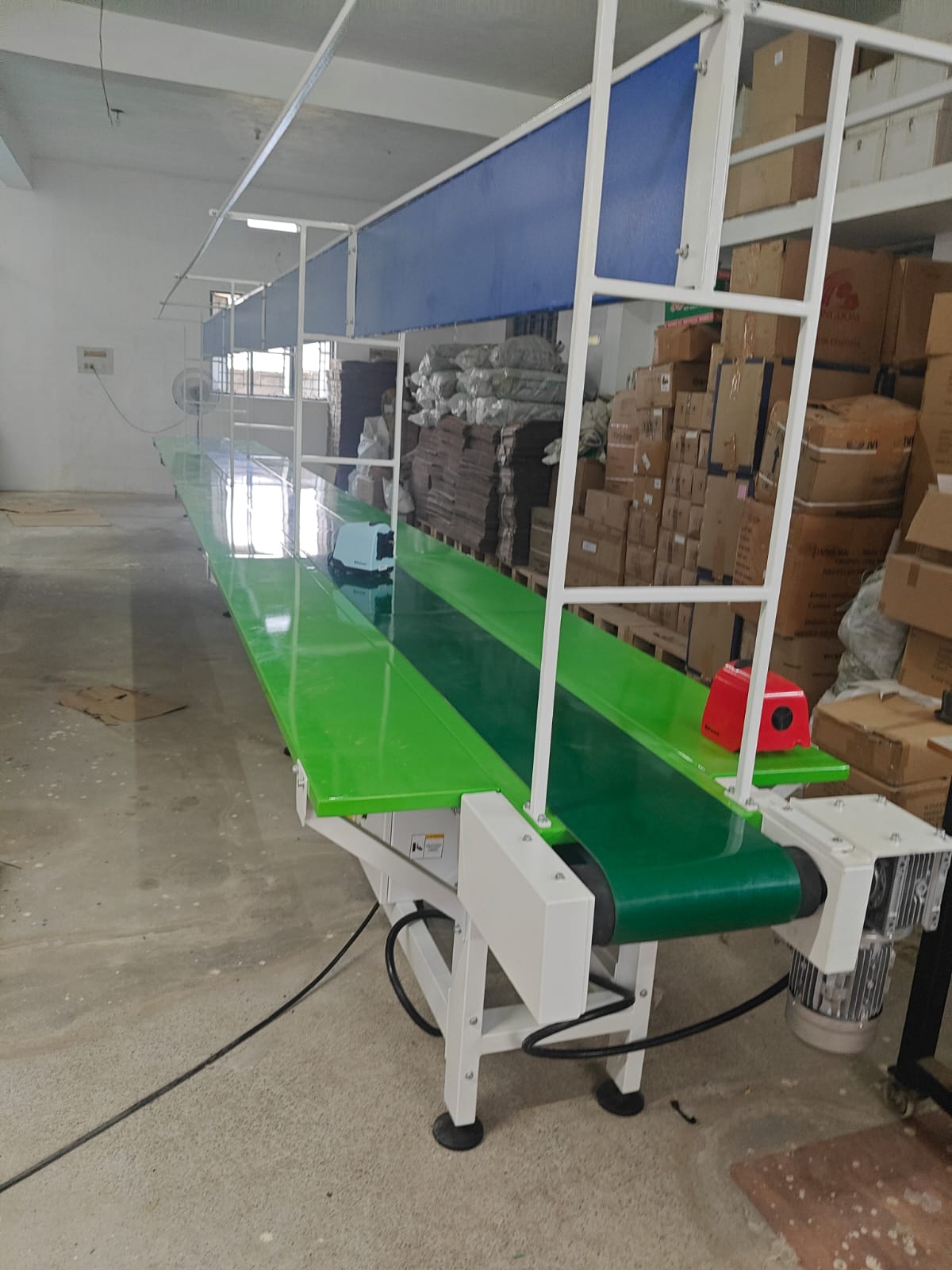 | CONVEYOR The Assembly Line Conveyor is a continuous material handling system designed to streamline production and assembly processes. View product → |
Frequently asked questions
What happens to a product at each conveyor station?
The product is conveyed, stopped or accumulated, processed, transferred to the next station and discharged while guides or datum surfaces maintain its position.
How do sensors and controls coordinate each handoff?
Sensors detect product presence and position; the control system uses those signals to start, stop, index or release the conveyor and prevent an early handoff.
How do you check whether a compact conveyor fits the production line?
Compare the conveyor footprint, product size and weight, required pitch, line speed, transfer height, access clearances and connection points with the existing equipment.
How does a compact conveyor handle difficult products and transfers?
Specify suitable belts, guides, stops and transfer components for the product’s shape, surface, stability and orientation, then test the handoff at operating speed.
What happens when a station stops, and how is the line recovered?
The controls stop or accumulate upstream products, isolate the blocked station and release products in sequence after the fault is cleared and the handoff conditions are confirmed.
Related product
 | BELT CONVEYOR The Transfer Line Belt Conveyor is designed for efficient and continuous material transfer between multiple process stations, machines, or packing... View product → |
Keywords