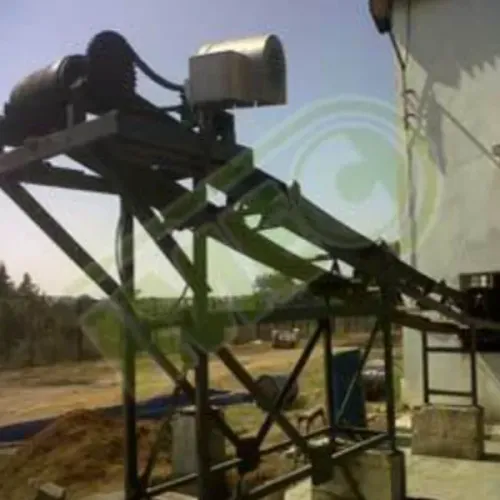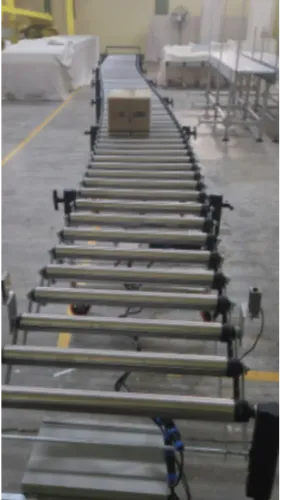
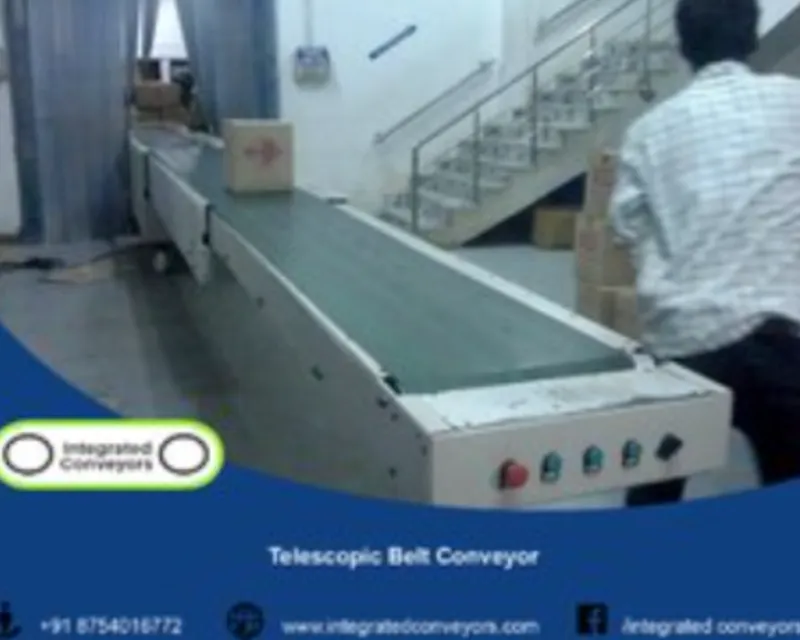
When goods regularly move between a warehouse floor and the interior of trucks or containers, a fixed conveyor may not provide enough reach. A Telescopic Belt Conveyor System addresses this challenge by extending toward the loading or unloading position and retracting when the additional length is no longer required.
Integrated Conveyors And Pacline Automation Technologies supports industrial conveyor applications where equipment needs to accommodate practical site conditions and changing material-handling requirements. For busy facilities in Coimbatore, telescopic systems can be especially relevant where dispatch or receiving operations handle substantial carton volumes.
Understanding the Telescopic Concept
Unlike a conventional fixed-length conveyor, a telescopic system incorporates extending conveyor sections. This allows the working end of the conveyor to reach farther into a vehicle or loading area.
The operator does not have to repeatedly carry every package across the full vehicle length. Instead, the conveyor brings the transfer point closer to the required position.
Operations That May Benefit
Telescopic conveyors are commonly considered for:
- Distribution warehouses
- Logistics centres
- Parcel handling
- Carton dispatch
- E-commerce fulfilment
- Manufacturing warehouses
- High-volume receiving areas
Their usefulness depends on shipment frequency and package characteristics.
When Should a Business Consider One?
Several operational signs can indicate that telescopic conveying deserves evaluation.
Frequent truck loading is one indicator. Another is excessive walking inside trailers or between the dock and vehicle interior.
Facilities may also consider the system when dispatch teams experience inconsistent loading rates, congestion around loading bays, or difficulty handling peak shipment periods.
Important Design Questions
Before specifying a system, assess vehicle sizes, required extension distance, conveyor width, package weight, package dimensions, floor height, loading-bay arrangement, operating frequency, and available retracted space.
Safety and operator access should also be considered. The conveyor must fit naturally into loading procedures rather than interfere with movement around the dock.
Relevance for Coimbatore Businesses
Manufacturing and logistics businesses in Coimbatore often dispatch products across Tamil Nadu and interstate markets. As shipment volumes increase, loading efficiency can influence both warehouse productivity and vehicle scheduling.
A telescopic belt conveyor system can create a more direct material path from the facility into the vehicle. When correctly sized and integrated, it can reduce repetitive manual travel and make loading operations easier to coordinate during high-volume periods.
5. Wire Mesh Conveyors or Belt Conveyors Which One Fits Your Process
Choosing between Wire Mesh Conveyors and conventional belt conveyors depends largely on what happens to the product while it is being transported. Although both systems move materials between process points, their surfaces behave very differently under heat, airflow, drainage, cleaning, and product-contact conditions.
Integrated Conveyors And Pacline Automation Technologies works with different conveyor configurations for industrial applications, making process conditions an important part of conveyor selection. Manufacturers in Coimbatore should evaluate the operating environment before deciding which conveying surface is appropriate.
When Wire Mesh Conveyors Are Useful
Wire mesh provides an open conveying surface. Depending on the material and design, this structure can allow air, liquids, heat, or process residues to pass through the conveyor.
Typical applications can include:
- Cooling processes
- Drying operations
- Heating-related production
- Washing or drainage applications
- Food-processing lines where suitable materials are specified
- Component transfer through process zones
The exact mesh pattern and construction must be selected for the product being handled.
When a Solid Belt Is More Appropriate
A flat or other solid belt offers continuous support beneath the product. It is often better suited to cartons, small packaged items, stable components, and applications where an open conveying surface is unnecessary.
A solid belt may also be preferred when small products could become unstable on an open mesh.
Questions That Help With Selection
Instead of asking which conveyor type is generally better, ask what the process requires.
Consider:
- Does air need to circulate around the product?
- Must water or liquid drain through the conveyor?
- Is the product exposed to elevated temperatures?
- Are components too small for the mesh opening?
- Does the product need complete bottom support?
- What cleaning requirements apply?
- What conveyor speed is required?
Answers to these questions quickly narrow the available choices.
Consider Maintenance Conditions
Mesh conveyors and belt conveyors have different cleaning, tracking, wear, and maintenance characteristics. These should be considered alongside initial equipment requirements.
For Coimbatore industries operating continuous production schedules, maintenance access can be particularly important because conveyor downtime may interrupt connected processes.
Selecting the correct conveyor surface is therefore a process decision, not simply an equipment preference. Wire mesh conveyors are valuable where their open structure contributes directly to production, while solid belts are effective where continuous support is more important. A process-focused evaluation helps prevent unnecessary complexity and creates a system better suited to long-term operation.
Keywords