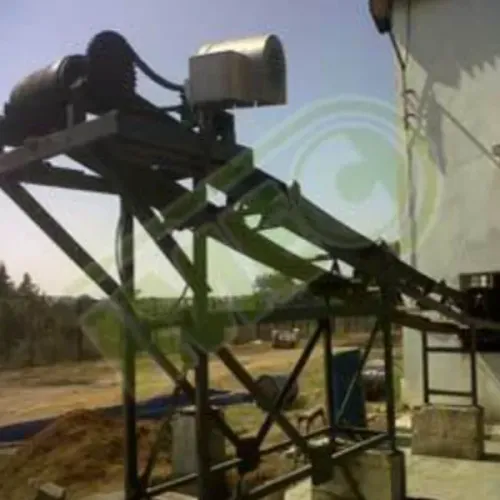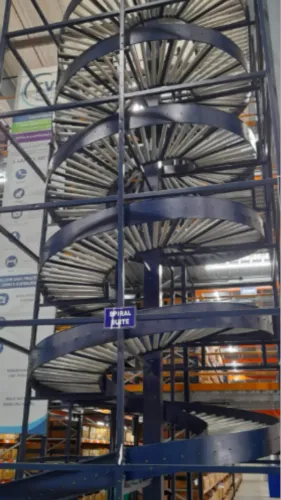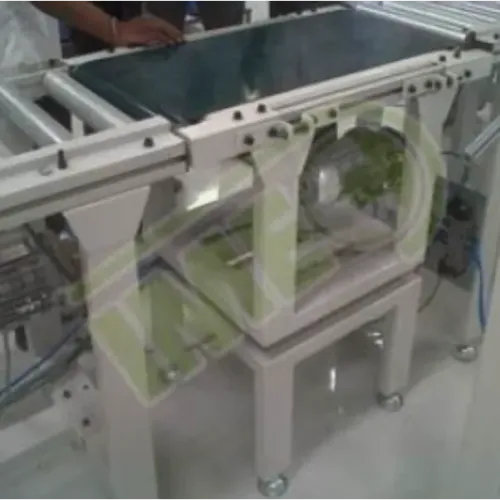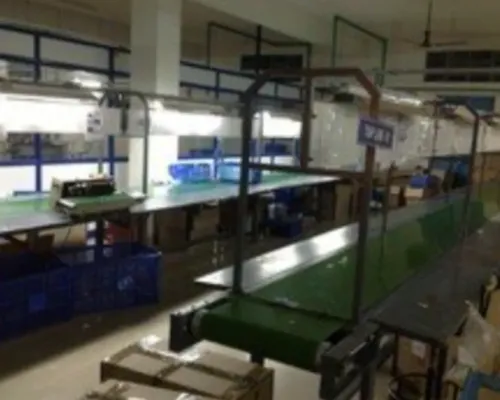
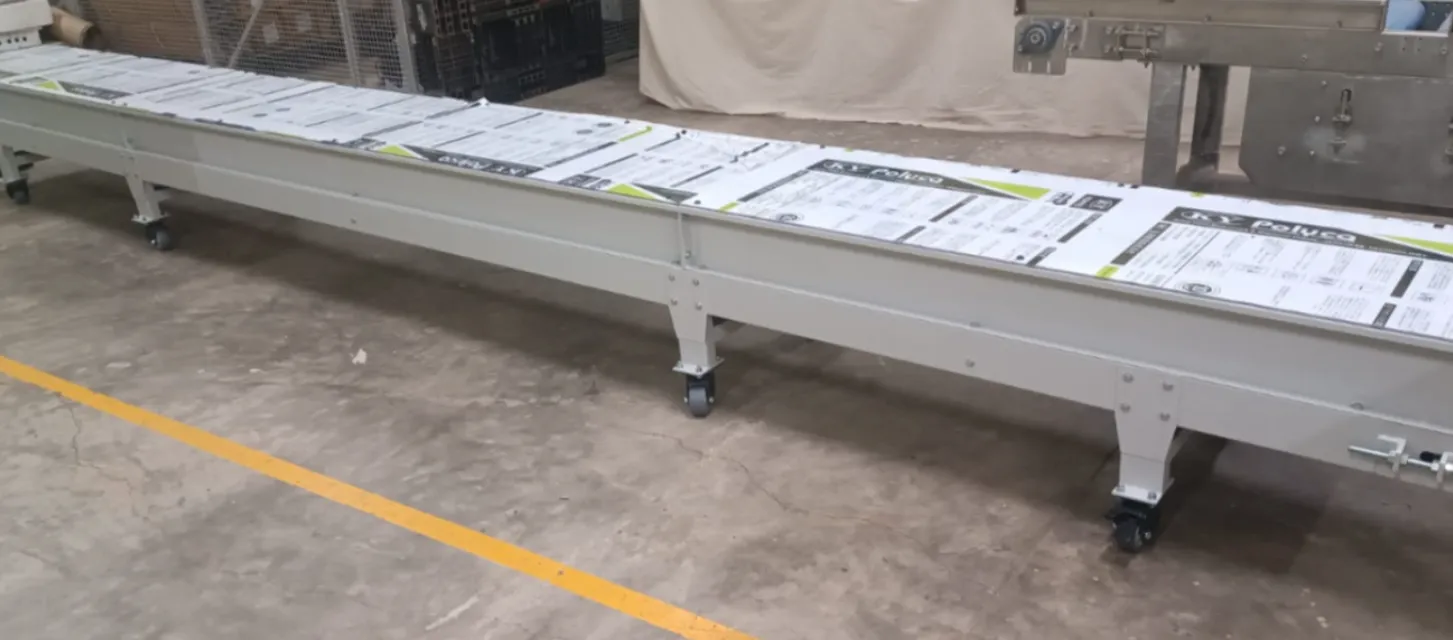
A Flat Belt Conveyor is one of the most widely adaptable material-handling solutions used in manufacturing, assembly, packaging, inspection, and product transfer. Its straightforward working principle makes it suitable for moving many products that have a stable surface and can travel safely on a continuous belt.
Integrated Conveyors And Pacline Automation Technologies develops conveyor solutions for different industrial processes, including applications where controlled horizontal or inclined product movement is required. For Coimbatore manufacturers, flat belt conveyors can be considered wherever repetitive manual transfer affects workflow.
What Makes Flat Belt Conveyors Versatile?
The conveyor uses a continuous belt supported by a suitable structure and driven through a motorized arrangement. Products are placed directly on the belt and transported between defined points.
Depending on system design, it can handle:
- Cartons and boxes
- Packaged products
- Engineering components
- Plastic parts
- Lightweight assemblies
- Bags and selected containers
- Products moving through inspection processes
Belt material and construction should always be selected according to the product and operating environment.
Manufacturing Applications
In assembly environments, flat belt conveyors can move parts between operators or workstations. This helps establish a predictable production sequence and reduces unnecessary movement around the shop floor.
Packaging facilities may use them between filling, labelling, inspection, sealing, and final packing operations. Warehouses can use suitable configurations for transferring packaged goods between zones.
Important Selection Factors
The conveyor should not be selected solely according to length and width. Manufacturers should also consider:
- Product weight
- Product dimensions
- Required belt speed
- Belt surface properties
- Inclination
- Loading method
- Operating hours
- Environmental conditions
- Integration with upstream and downstream equipment
For example, an incline application may require additional belt grip, while an inspection conveyor may prioritize stable product positioning.
Planning for Coimbatore Facilities
Factories in Coimbatore, Tamil Nadu, often operate within existing layouts where floor space, machinery placement, columns, aisles, and operator movement already define the available area. Conveyor planning should therefore consider the complete production environment.
A carefully configured flat belt conveyor can support predictable product movement without making the system unnecessarily complicated. The key is to match belt specifications, dimensions, speed, and layout with the real product-handling requirement.
For facilities considering automation, this type of conveyor can also provide a practical foundation for integrating inspection, packaging, sorting, or other equipment later.
Keywords